Discover our 2025 selection of the best breathing tools for hypertension
High blood pressure is a silent enemy, but deep breathing (or coherent breathing) may well be the most underrated weapon in the fight against it. Research shows that just a few minutes of slow, controlled breathing each day can lead to a significant drop in blood pressure—with apotential reduction in systolic pressureof up to 10 points. Yes, simply by controlling your breath, you activate your body's natural response: the famous "rest and digest" mode, which dilates blood vessels and slows the heart rate. The result? Less pressure on the arteries and amore balanced cardiovascular system.
But as always, consistency makes all the difference. The benefits of deep breathing are most apparent when practiced daily—ideally 20 minutes a day for several weeks. The hardest part? Staying consistent. Fortunately, a new generation of breathing tools is coming to the rescue: devices ranging from certified medical devices to connected wellness gadgets, all designed to help you make this habit part of your daily routine.
We have selected the four best breathing tools for hypertension. Each one takes a different approach, and here we present their prices, features, advantages, and disadvantages. Take a deep breath... and let's dive into this selection together.
| Device | Type | Price | Key features | Benefits | Disadvantages |
|---|---|---|---|---|---|
| 1. RESPeRATE | Audio-guided breathing sensor | 693€ | FDA approved, belt + headset, musical sound guidance | Clinically proven effectiveness, no application required, long-lasting benefits for blood pressure | Outdated technology, long sessions, high price |
| 2. POWERbreathe | Inspiratory Muscle Training (IMT) | $80–$900 | Adjustable resistance, digital feedback (depending on model) | Strengthens breathing, quick sessions | Physically demanding, learning curve, expensive high-end models |
| 3. HeartMath | HRV biofeedback + breathing app | 275€ | Real-time tracking, guided sessions, consistency score | Interactive, data-driven, improves stress and coherent breathing | Requires a smartphone, not suitable for non-techies |
| 4. neoflo | First touch-guided breathing belt | 189€ | Sensory belt, vibrotactile guidance, 7 built-in programs | Without application, coherent breathing effortless guided abdominal breathing in 20-minute sessions | Requires regular use, not med-tech certified |

1. RESPeRATE – FDA-approved guided breathing device
Overview: RESPeRATE is somewhat of a veteran amongbreathing tools for hypertension. It is the only FDA-approved device that has been proven effective in lowering blood pressure through guided breathing exercises. The system includes a belt with a breathing sensor and headphones. The device emits two musical tones—one for inhaling and one for exhaling—while gradually lengthening your exhalations to slow your breathing rate.
By training you to breathe at a rate of less than 10 breaths per minute, RESPeRATE promotes blood vessel dilation and naturally helps lower blood pressure. For years, doctors have recommended it as a drug-free therapy, in addition to treatment and healthy lifestyle habits.
Price: Approximately €693 for the basic model on the manufacturer's website.
Key features: Sensor-based biofeedback, guided 15-minute sessions (to be practiced at least 3 to 4 times per week), automatic adaptation to your breathing rate, simple interface with no smartphone required.
Advantages:
-
Clinically proven effectiveness: studies show an average decrease of 14 points in systolic blood pressure and 8 points in diastolic blood pressure with regular practice.
-
Approved by the FDA as a safe, non-drug treatment.
-
Easy to use, even for seniors or people who are not comfortable with technology: just follow the soothing sounds.
-
No side effects—just relaxation.
-
Ideal for those who prefer a standalone device, without an app or phone screen.
Disadvantages:
-
The price is high, especially for a technology that is starting to show its age.
-
The hardware interface is a bit outdated (small screen, wired sensors) in this age of intuitive applications.
-
You need to set aside enough time for the session: some people find it difficult to remain still for 15 minutes.
-
It is not a miracle solution: it is a wellness tool that requires regular practice over several weeks to achieve lasting effects.

2. POWERbreathe (IMST) – Muscle training for breathing
Introduction: If you like to feel the effort in your workouts, POWERbreathe should appeal to you. It is an IMST (Inspiratory Muscle Strength Training) device—in other words, a resistance trainer for the respiratory muscles. You breathe in (and out) through a mouthpiece that provides resistance to the air, strengthening your diaphragm and intercostal muscles. It's a bit like lifting weights, but for your lungs.
What does this have to do with high blood pressure? Recent studies show that strengthening the respiratory muscles can improve vascular function. A 2022 study by the University of Colorado Boulder found that just 5 minutes a day of high-resistance breathing exercises led to a9-point drop in systolic blood pressurein just six weeks—results comparable to some drug treatments!
As an added bonus, this device improves overall respiratory efficiency and can also benefit athletic performance and lung health.
Price: Between $80 and $900, depending on the model. Basic mechanical versions (without electronics) generally cost less than $100. High-end models such as the POWERbreathe K3, with digital feedback and built-in coaching, sell for around $800 to $900.
Key features:
-
Adjustable resistance (check that it can exceed 100 cm H₂O for optimal effect)
-
Some models include digital coaching or a Bluetooth app.
-
Typical workout: 30 breaths per day, or about 5 minutes
-
Compact and portable format, no electricity required (except for electronic versions)
Advantages:
-
Backed by science: several studies confirm the effectiveness of IMST devices in improving artery flexibility and thereby reducing blood pressure.
-
Significant time savings: just 5 minutes a day is enough to see results – ideal if you're "too busy to breathe."
-
Improves inspiratory muscle strength, beneficial for overall fitness and daily endurance
-
Sturdy and easy to carry (some models fit in your pocket)
Disadvantages:
-
It is not a Zen practice: you have to make a real effort.
-
Beginners may experience muscle fatigue or slight dizziness at first.
-
Proper technique and consistency are required to reap the benefits (inconsistency negates the effects).
-
High-end models are expensive, while entry-level models may lack power for advanced users.
-
Finally, although promising, IMST applied to hypertension remains a recent approach: it is recommended to seek medical advice, especially in cases of respiratory disease or severe hypertension.

3. HeartMath Inner Balance – When biofeedback meets breathing
Introduction: For data enthusiasts and mindfulness practitioners, HeartMath Inner Balance offers a high-tech approach to reducing stress—and potentially helping to regulate blood pressure. It's not a "breathing tube," but a biofeedback sensor paired with a mobile app that trains you to achieve a state ofcoherent breathing a natural synchronization between your heart rate and your breathing.
Simply clip the sensor onto your earlobe (or use a chest strap): the device then connects to your smartphone and displays your heart rate variability (HRV) in real time. By following the guided breathing exercises offered by the app and observing your coherence score, you will learn to synchronize your breathing and heart rate.
This deep breathing practice stimulates the vagus nerve and calms your nervous system, which, with regular practice, can help lower blood pressure and reduce stress. In fact, HeartMath's own studies of people with high blood pressure showed asignificant reduction in blood pressureafter several weeks of training with their devices and protocols.
Price: Approximately $275 for the Bluetooth sensor (Inner Balance Coherence Plus). Older wired models or those sold by third-party retailers are sometimes available for between €150 and €200. There are also more advanced devices (emWave Pro) designed for professionals, but for personal use, Inner Balance is the recommended model.
Key features:
-
Real-time monitoring of heart rate variability (HRV)
-
Guided breathing and meditation exercises via the app
-
Progress tracking, consistency score, and gamified feedback (level system)
-
Customizable sessions starting at just 5 minutes
-
Soothing visual and audio interface to regulate breathing
Advantages:
-
A scientific and recognized tool: used by many psychologists, coaches, and even hospitals to reduce stress.
-
Makes deep breathing more engaging with immediate feedback: you can literally see your stress levels decrease on the screen.
-
Versatile: useful for managing blood pressure, anxiety, sleep, or mental performance
-
No approximations: the data is objective and in real time.
-
Highly flexible sessions: whether it's for a 5-minute breathing break or a longer meditation session, the choice is yours.
Disadvantages:
-
You need a smartphone and a screen that is turned on during use, which may distract some people who prefer to practice with their eyes closed.
-
This device is not specifically designed for blood pressure: it does not provide direct pressure measurements or medical guarantees. The effects are indirect, resulting from stress reduction.
-
The sensor remains expensive for a personal accessory, and a little preparation time is required before each session (clipping it on, launching the app).
-
Finally, if you are looking for a screen-free, 100% offline solution, Inner Balance may seem too technological—it is primarily aimed at those who like data-driven tools.

4. Neoflo breathing belt – Well-tech innovation for better breathing
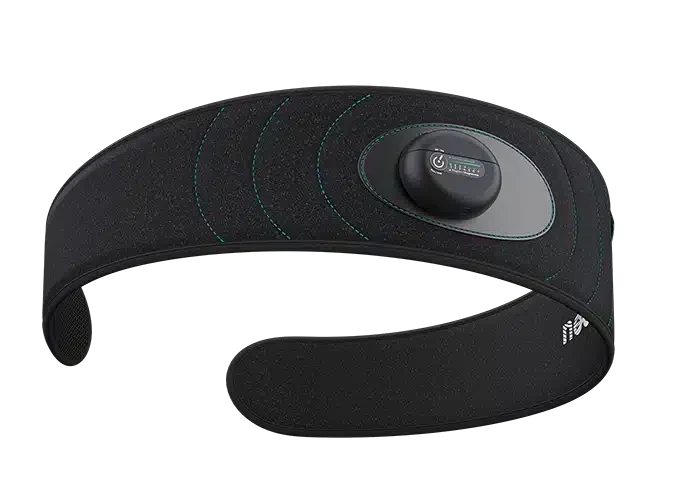
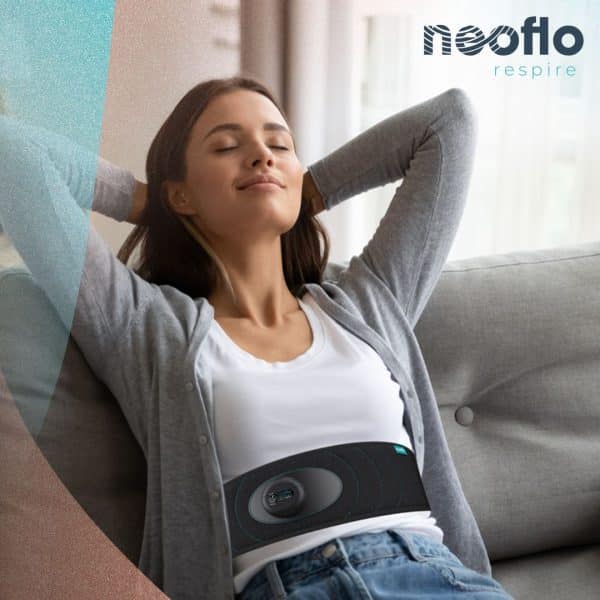
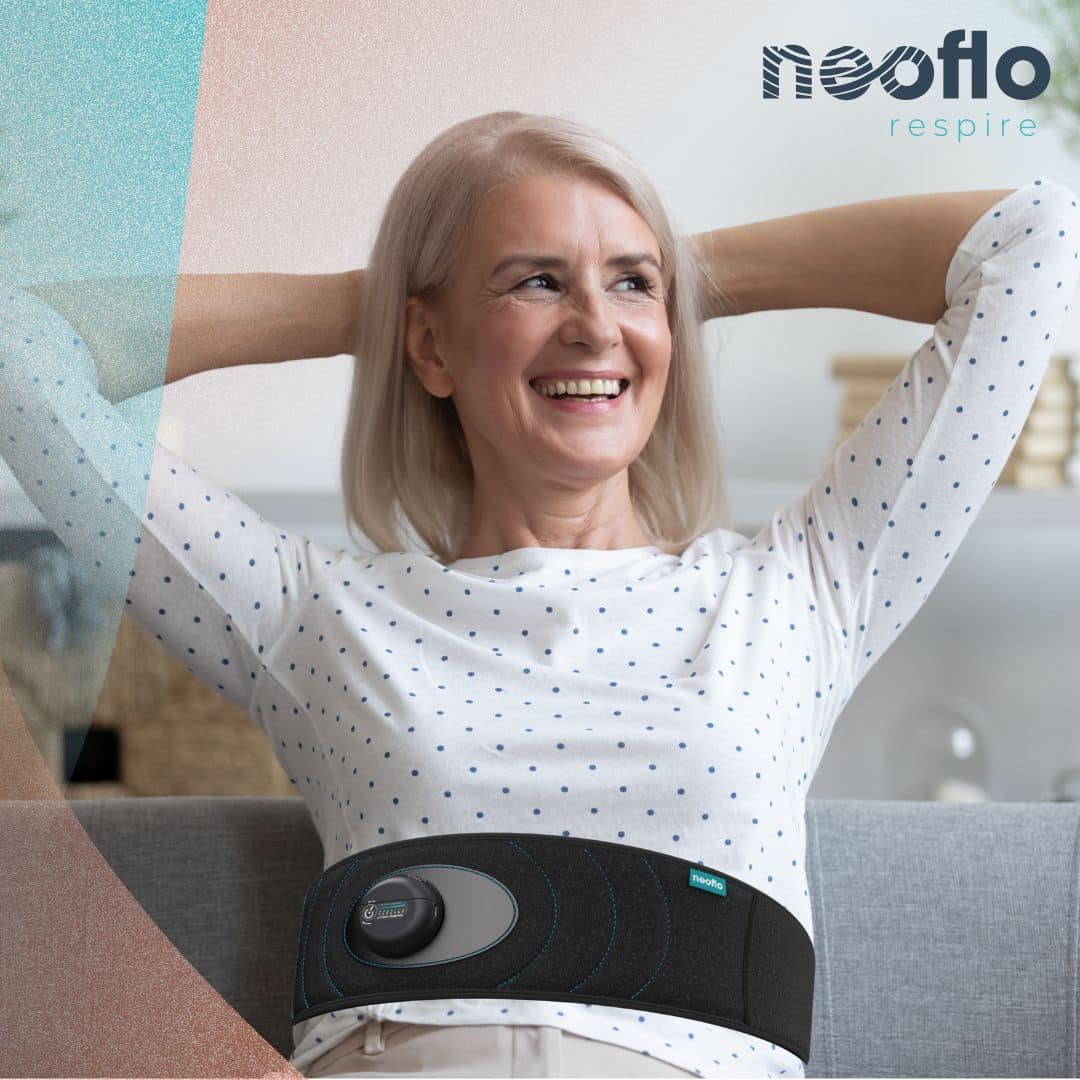
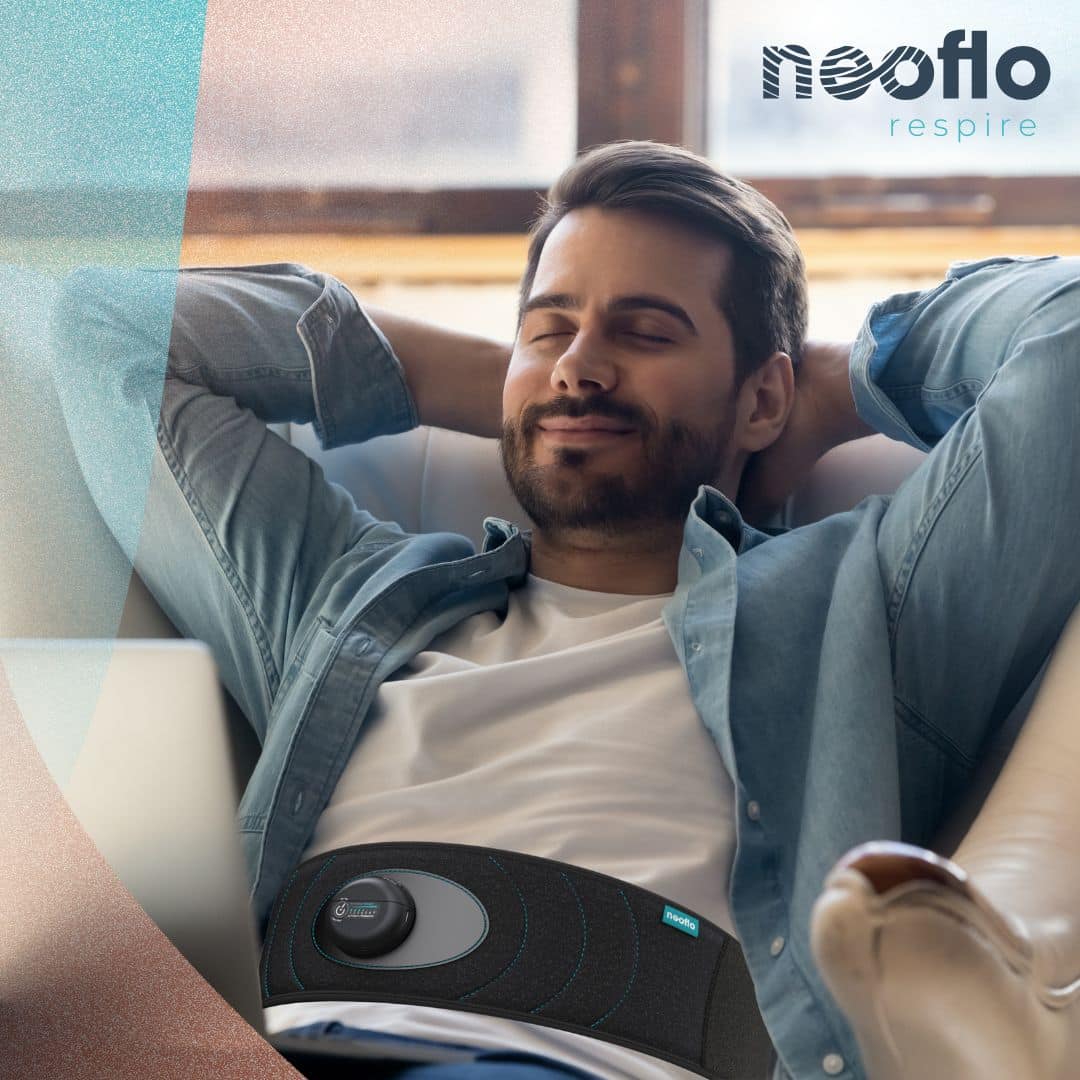
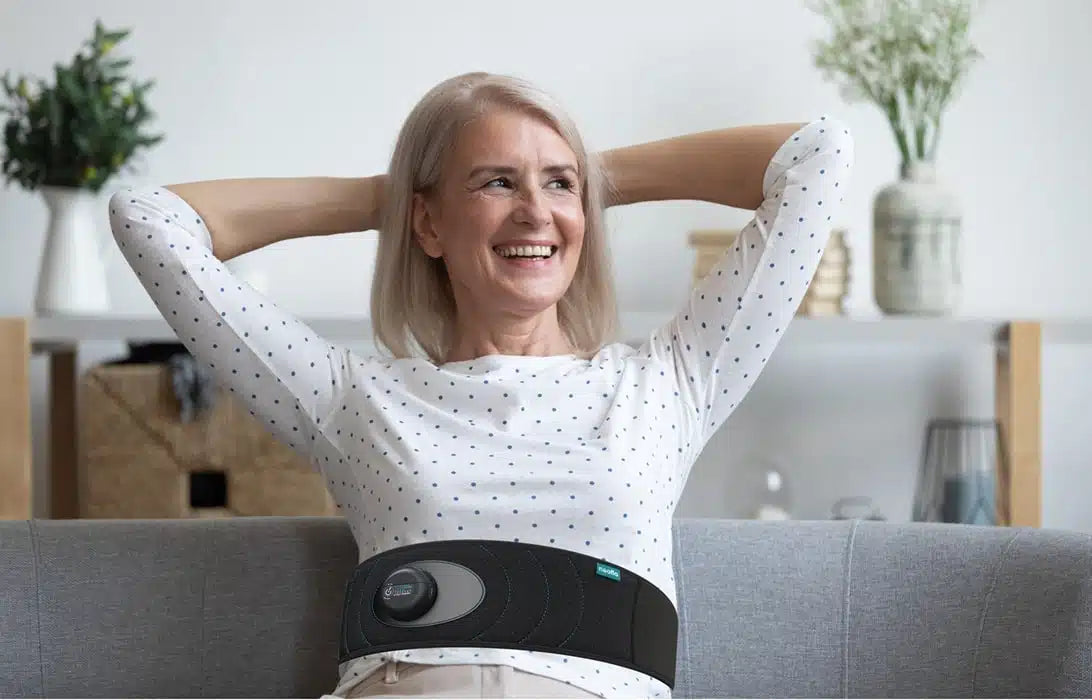
Presentation: The Neoflo breathing belt is unlike any other device on this list. It is a sensory belt worn around the waist that guides your breathing with gentle rhythmic vibrations. This innovative device sets the standard in wellness technology (well-tech), combining the effectiveness of coherent breathing exercises coherent breathing ease of everyday use.
How does it work? You wear the Neoflo belt around your abdomen. It then encourages you to breathe slowly thanks to a precise vibrating rhythm: inhale when the vibration moves from the sides to the front, exhale when it returns to the sides. This cycle is repeated during a 20-minute session, creating intuitive and soothing tactile guidance.
By encouraging slow, steady abdominal breathing, neoflo activates theparasympathetic nervous system—the system responsible for rest, recovery, and calm. The result? A state of deep relaxation. Regular users report reduced stress, improved sleep quality, and, over time, a noticeable improvement in their heart rate variability and blood pressure balance.
The Neoflo belt is not a medical device and does not claim to treat high blood pressure. However, it is undoubtedlythe most immersive and simplest toolfor effortlessly practicing slow breathing, which is recommended by healthcare professionals to help regulate blood pressure.
Price: €189. The kit includes the belt, an extension to fit all body types, a charger, and a carrying pouch. Worldwide shipping is available, and you get a 30-day money-back guarantee.
Key features:
-
Three low-frequency vibro-tactile motors built into the belt guide your breathing with a progressive rhythm (inhale/exhale).
-
7 built-in breathing programs (no phone or app required), designed for relaxation, sleep, energy, etc.
-
Each session lasts 20 minutes, with 7 adjustable intensity levels.
-
Fits waist sizes from 65 cm to 145 cm (thanks to the included extension)
-
Comfortable, lightweight, and designed to be worn over clothing
-
10-hour battery life, allowing for multiple sessions between charges
Advantages:
-
100% hands-free, screen-free experience—perfect for completely disconnecting and refocusing on your breathing
-
Naturally promotes abdominal breathing, which is the most effective way to activate the vagus nerve and induce a deep state of calm.
-
The user physically feels the breathing rhythm around their stomach, which instinctively stimulates the diaphragm (and prevents shallow breathing).
-
Super easy to use: just clip it on, press a button, and you're good to go—perfect for those who quickly get discouraged by complex apps or routines.
-
Can be used while reading, meditating, or at the office—it transforms moments of calm into opportunities to practice coherent breathing
-
Designed for lasting benefits: regular users report a feeling of calm, better sleep quality, and more stable blood pressure over time.
-
Acclaimed by therapists and wellness professionals for its intuitive and accessible approach
-
No electric current, only gentle vibrations: safe for the vast majority of users
Disadvantages:
-
Like any high-quality wellness device, the initial investment is significant. But since it replaces numerous guided sessions or apps, the purchase often pays for itself quickly.
-
As neoflo is a well-tech (rather than med-tech) device, it does not make any medical claims: in cases of severe hypertension, the belt should be viewed as a complementary stress management tool, rather than a treatment in itself.
-
You have to remember to recharge it and wear it regularly—a small effort, but necessary to create a real routine.
-
And no, it's not a magic belt: you're still the one breathing... but with neoflo, it becomes simple, natural, and deeply soothing.

Conclusion
Deep breathing isn't some esoteric fad: it's a scientifically proven method for improving your cardiovascular health from the inside out. The best breathing tools for high blood pressure act like personal coaches: they teach you to slow down, breathe consciously, and send a clear signal to your body to release the pressure.
Whether you are drawn to the clinical approach of RESPeRATE, the muscular challenge of POWERbreathe, the biofeedback feedback of HeartMath, or the immersive sensory experience of the neoflo belt, the key is to find the tool that you will use regularly. High blood pressure is a tough opponent, but these devices put a natural solution at your fingertips—or rather, at your waist.
In our opinion, the Neoflo belt stands out in particular for its innovative design and ease of use: it transforms coherent breathing a daily ritual, effortlessly, without a screen, and without distraction. However, each of the tools presented can play a valuable role in your journey toward more stable blood pressure and a more peaceful life.
Remember: breathe in deeply, breathe out slowly... and regain control of your well-being, one breath at a time.