
Cardiac Coherence Exercise: 6 Essential Recommendations Based on New Discoveries in Neuroscience
Cardiac coherence is a slow, rhythmic breathing technique that helps synchronize the heart, the brain, and the autonomic nervous system. In practice, this means learning to breathe at a specific rhythm to stimulate the vagus nerve—the "highway of calm" that connects our brain to our internal organs.

Numerous scientific studies now confirm that this method has tangible and measurable effects on stress reduction, anxiety management, sleep quality, and even cognitive function. But to reap the maximum benefits, you still need to practice it correctly—which is what neoflo calls the vagus nerve deep breathing.

Here are 6 recommendations based on the latest neuroscience research for deeply activating the vagus nerve through cardiac coherence.
Free stress check
Is your body stuck in alert mode?
Find out how you're handling stress, and whether breathing exercises can help you take the pressure off.
Start my stress check🎁 Get an exclusive discount on neoflo
1. Aim for a 4-6 rhythm (4 seconds to inhale, 6 seconds to exhale)
A recent academic study (Marchant, 2025) compared several popular breathing techniques: 5-5 and 4-6 cardiac coherence, square breathing (4-4-4-4), and the 4-7-8 rhythm.
Conclusion: The 4-6 rhythm stimulates the vagus nerve most strongly and significantly increases heart rate variability (HRV)—an indicator of physiological resilience. Exhaling for longer than inhaling is the key: this is what sends the strongest vagal signal to the brainstem.
🧠 Source: Marchant, J. (2025). “ Comparing the Effects of Square, 4-7-8, and 6 Breaths-per-Minute Breathing Conditions on HRV.”
2. Do long workouts (> 15 minutes): the vagus nerve deep breathing
Researchers observed a dose-dependent effect: the longer the session, the longer the effects on the autonomic nervous system (You et al., 2021). After 15 to 20 minutes of slow breathing, spontaneous breathing slows on its own from 16–17 to 11–12 breaths per minute—a sign of prolonged vagus nerve activation that persists even outside the session.
It is this 20-minute session that we call the vagus nerve deep breathing : the scientifically standardized version, as opposed to the 5-minute sessions popularized by the 365 method, which produce only a transient acute effect.
🧬 Source: You M. et al. (2021). “ Single Slow-Paced Breathing Session at Six Cycles per Minute.” IJERPH.

3. Breathe with your nose and diaphragm
Nasal breathing stimulates the olfactory bulb and influences neural rhythms in the limbic brain (Zelano et al., 2016). Furthermore, diaphragmatic breathing activates internal receptors connected to the vagus nerve (Kocjan et al., 2017). Together, these two types of breathing optimize the neurological impact of cardiac coherence—it is precisely this combination that is found in all clinical trials that have demonstrated lasting effects.
🌬️ Sources: Zelano C. et al., 2016; Kocjan J. et al., 2017

4. Practice every day for at least 4 to 8 weeks.
Clinical trials have shown that practicing cardiac coherence daily for 1 to 2 months leads to lasting changes in the brain: the prefrontal cortex (the seat of calm and reasoning) becomes more connected to the amygdala (the center of fear), thanks to the neuroplasticity induced by breathing. It is this remodeling that transforms underlyinganxiety and builds long-term resilience to stress.
🔁 Source: Cho C. et al. (2023). “Changes in the Medial Prefrontal Cortex Mediate the Effects of Heart Rate Variability Biofeedback on Positive Emotional Memory Biases.”
5. Practice in the evening for better sleep
Cardiac coherence sessions just before bedtime improve sleep quality and physiological recovery. A study (Laborde et al., 2019) showed that this practice enhances nocturnal vagal activity and promotes faster and deeper sleep onset. To learn more, check out our article on cardiac coherence for sleep.
🌙 Source: Laborde S. et al. (2019). “ Slow-Paced Breathing and Sleep Quality.” J Clin Med.

6. Use a body guide to make the practice easier
La stimulation tactile rend la pratique de la cohérence cardiaque plus intuitive et plus ancrée dans la durée. Des recherches en interfaces haptiques (Yu et al., 2015 ; Greinacher et al., 2020) ont prouvé que le retour tactile permet une meilleure régulation du rythme respiratoire tout en réduisant la charge mentale, ce qui prolonge les sessions. L'étude la plus directe — Bouny et al. (2023, revue Sensors) — a démontré que le guidage tactile produit un index de cohérence cardiaque deux fois supérieur au guidage visuel (0,55 vs 0,28, p < 0,05). Sans écran, sans application, sans effort cognitif.
✋ Sources: Yu B. et al. (2015); Greinacher R. et al. (2020); Bouny P. et al. (2023)

Free stress check
Is your body stuck in alert mode?
Find out how you're handling stress, and whether breathing exercises can help you take the pressure off.
Start my stress check🎁 Get an exclusive discount on neoflo
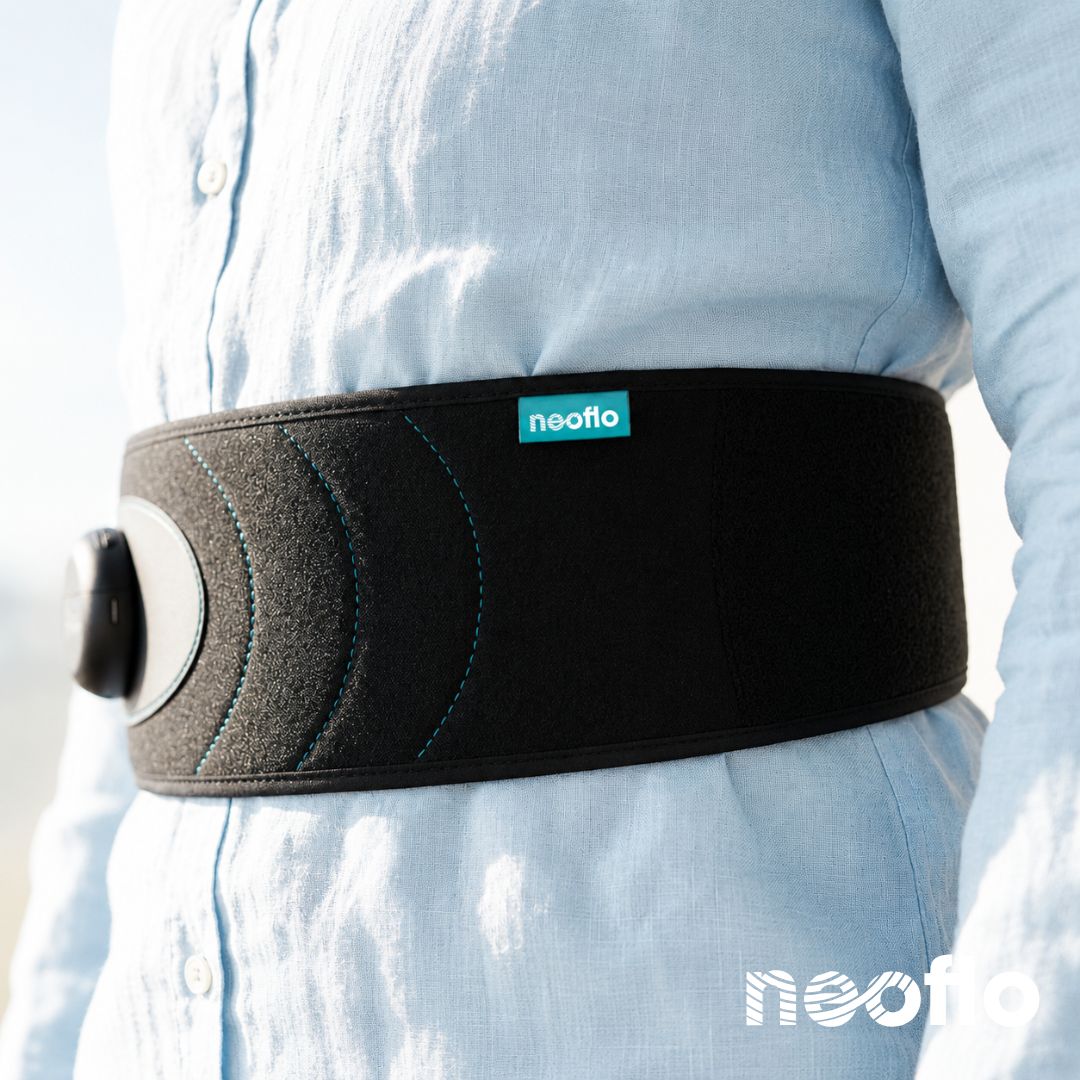
neoflo : the belt that incorporates all of these recommendations
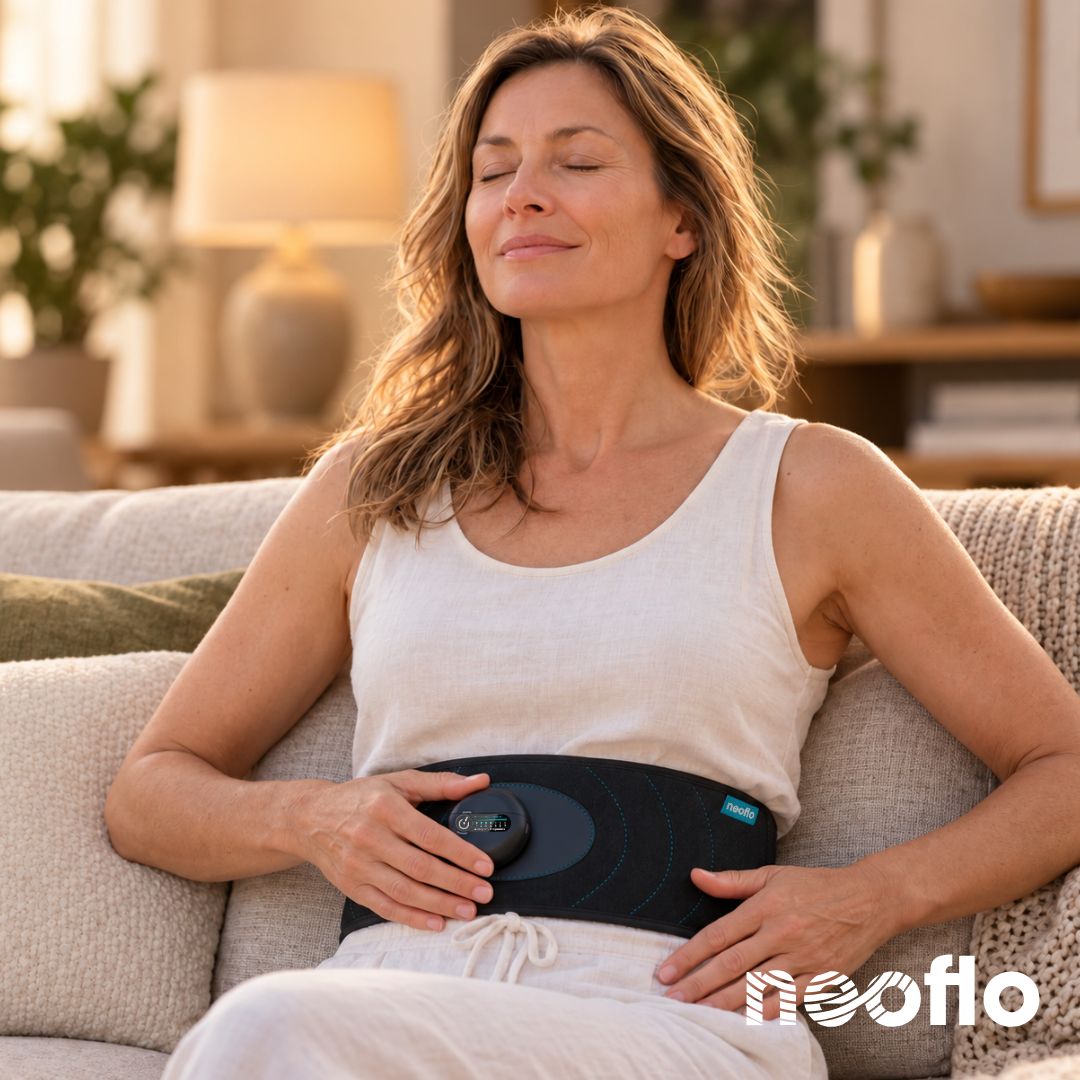
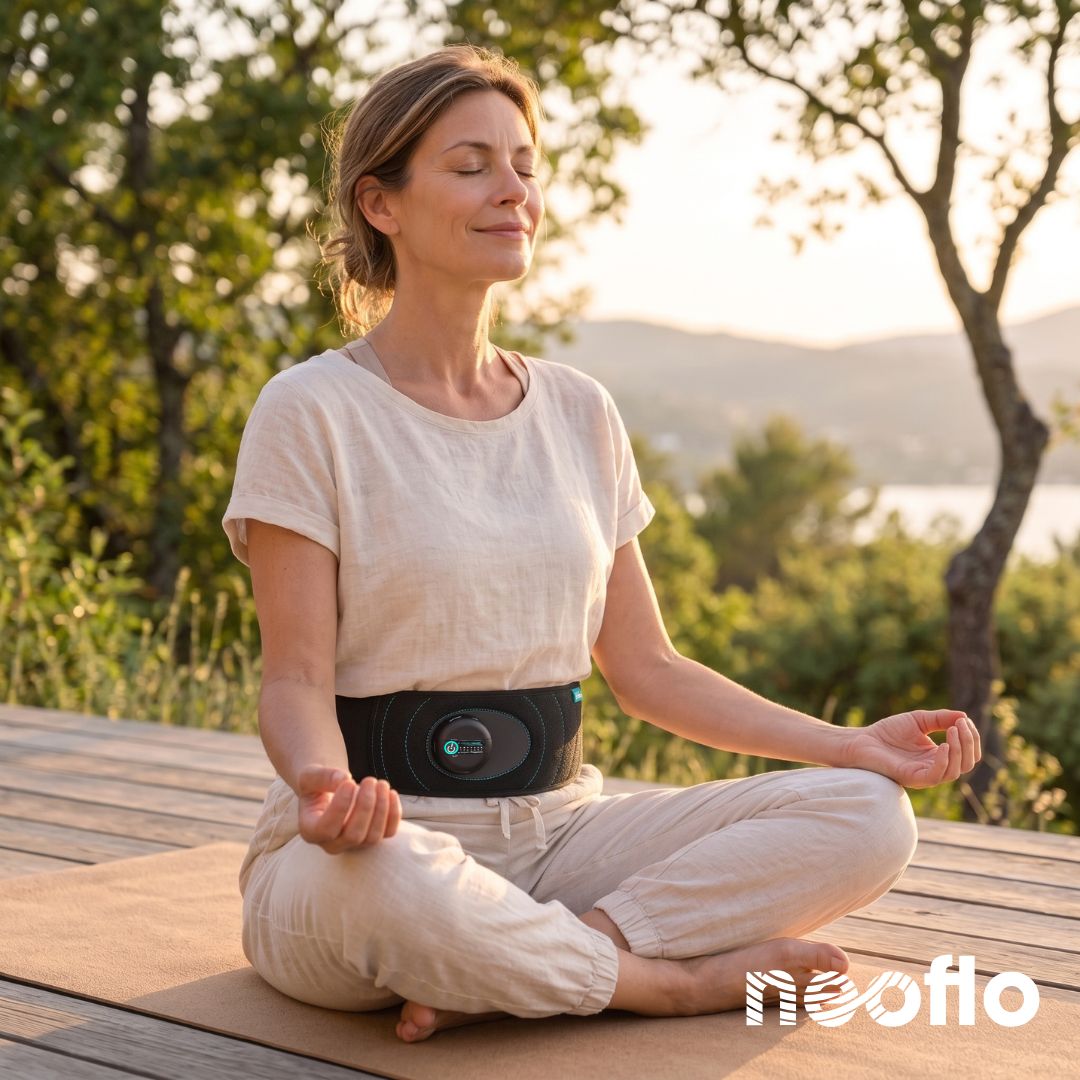
neoflo 's breathing belt is the world's first device that guides your breathing through touch, using patented haptic technology. It guides you through a daily 20-minute practice at the optimal rhythm (4-6), using nasal and abdominal breathing—incorporating all six of the scientific recommendations listed above in a single tool.

👉 By using it in the evening, whether lying down or sitting up, you naturally stimulate your vagus nerve without having to count or stare at a screen. Invented by a biomedical engineer and co-developed with Dr. Thomas Cantaloup, a physician specializing in sleep and mental health.
🎖️ Bronze medal at the 2024 Lépine Competition — neoflo transforms the science of breathing into an accessible daily ritual.
Conclusion
Cardiac coherence is more than just a relaxation exercise: it’s a powerful neurophysiological tool. But to reap its full benefits, you need to practice for a long time, regularly, and under the right conditions. That’s exactly what the vagus nerve deep breathingneoflo makes possible every day.

Discover the " vagus nerve deep breathing " with neoflo
20 minutes a day of touch-guided breathing. No screens, no effort. The scientifically proven practice of cardiac coherence, finally achievable in everyday life.
- ✓ 30-day "money-back guarantee" trial
- ✓ Free shipping within 48 hours
- ✓ 2-year warranty
- ✓ Designed by a biomedical engineer and a physician
- ✓ Bronze Medal, 2024 Lépine Competition
Discover the " neoflo " belt →
neoflo This is not a medical device and is not a substitute for medical advice. If symptoms persist, consult a healthcare professional.