
You go to bed tired, but your mind won’t shut off. Thoughts keep racing. Sleep finally comes two hours later. Or you fall asleep quickly, but wake up at 3 a.m., heart pounding, unable to get back to sleep. If this scenario sounds familiar, yournervous system isn’t unwinding in the evening. And that’s exactly what coherent breathing, practiced 20 minutes before bedtime, is designed to correct.
This article explains why coherent breathing such a powerful coherent breathing on sleep, what science has shown, and how to put it into practice at night to transform your sleep.
Why You Can't Sleep: The Nervous System That Stays "On"
Sleep isn’t a light switch. It’s a transition controlled by yourautonomic nervous system. During the day, the sympathetic nervous system dominates: it keeps you alert, productive, and responsive. In the evening, the parasympathetic nervous system—orchestrated by the vagus nerve—must take over to slow the heart rate, lower blood pressure, release melatonin, and allow the mind to relax.
Except that when you’re dealing with chronic stress, screen overload, late-night coffee, mental overload, or anxiety, this transition no longer happens. Your body is in bed, but your nervous system remains in “daytime” mode. The result: it takes a long time to fall asleep, your sleep is fragmented, you wake up during the night, and you don’t feel fully rested in the morning.
coherent breathing directly coherent breathing this issue by consciously activating the parasympathetic nervous system. You aren’t forcing yourself to sleep—you’re creating the physiological conditions in which sleep occurs naturally.

How coherent breathing sleep
When you breathe at a rateof 6 cycles per minute(5 seconds inhaling, 5 seconds exhaling, or 4 seconds inhaling, 6 seconds exhaling), your breathing synchronizes with the cardiovascular baroreflex. This synchronization stimulates the vagus nerve—the main pathway of the parasympathetic nervous system—which sends a powerful signal to the brain to switch to recovery mode.
This activation triggers a chain reaction:
- Adecrease in heart rateandblood pressure
- Adecrease insalivarycortisol (the stress hormone that inhibits sleep)
- Anincrease in heart rate variability (HRV), a direct marker of neural resilience
- Modulation of the amygdala and the anterior cingulate cortex, the brain regions involved in rumination
- Arelaxation of the diaphragm muscles, which relieves tension built up throughout the day
The mechanism has been validated by more than 100 clinical trials and 5 major meta-analyses on slow breathing. For scientific details, visitour Science page.
What the science of coherent breathing says coherent breathing sleep
The leading French study on this topic is that ofLaborde et al. (2019,Journal of Clinical Medicine). In a group of students who practiced for 20 minutes a day over 30 days, the researchers observed asignificant improvement in sleep qualityas measured bythe PSQI (Pittsburgh Sleep Quality Index), compared to a control group.
A recent systematic review (Zuo et al., 2026,Annals of the American Thoracic Society) confirms the effect of slow breathing on subjective sleep quality and on the physiological parameters of mild to moderate sleep apnea. The meta-analyses by Kwon 2025 (48 RCTs on diaphragmatic breathing) and Lehrer 2020 (58 RCTs) document a broad effect on the anxiety disorders underlying insomnia: it is by regulating underlying anxiety that coherent breathing sleep.
The consensus is that regular exercise improves the ability to fall asleep, sleep depth, and the feeling of being refreshed upon waking. There is one caveat, however:the amount of exercise.

20 minutes before bedtime: why timing makes all the difference
All over the internet, you read that you should practice coherent breathingfor5 minutes, 3 times a day. It’s easy to remember, but that’s not the dosage that science has validated. Nearly all clinical trials use sessions lasting15 to 30 minutes. The Kwon 2025 review states this explicitly: the effects of diaphragmatic breathing aredose-dependent.
Specifically regarding sleep:
- A5-minute sessionbeforebedtime has an immediate effect—you feel calmer during and right after. But the effect doesn't last until you fall asleep.
- A15- to 20-minute session trulyshiftsyour nervous system into parasympathetic mode. Your resting heart rate drops, your spontaneous breathing rate decreases from 16–17 to 11–12 breaths per minute, and your body is ready for deep sleep.
- Practicingdailyfor30 days or more leads to lasting changes in your resting vagal tone—in other words, your nervous system learns to regulate itself, even outside of your sessions.
It is this 20-minute session that we call Deep Cardiac Coherence™. It is this that transforms your nights, not the 5-minute version.
How to Practice coherent breathing Evening: A 5-Step Protocol
It's easy to do. Here's the routine to follow:
1. Choose a time 30 to 60 minutes before lights out
Ideally after dinner, before your last shower, or just before going to bed. Avoid doing this during a meal (the diaphragm needs to be able to move freely) or immediately after intense physical activity.
2. Get comfortable
Sitting in an armchair, lying on a sofa, or right in bed. Keep your back relaxed. You can keep your eyes open or close them—it’s better to close them, but don’t force it.
3. Breathe from your abdomen, not your chest
As you inhale, your abdomen expands. As you exhale, it contracts. Your chest barely moves. This isabdominal breathing. If you can’t do it naturally, place one hand on your abdomen and one on your chest: only the hand on your abdomen should rise and fall.
4. Follow the 5-5 or 4-6 rhythm (6 cycles per minute)
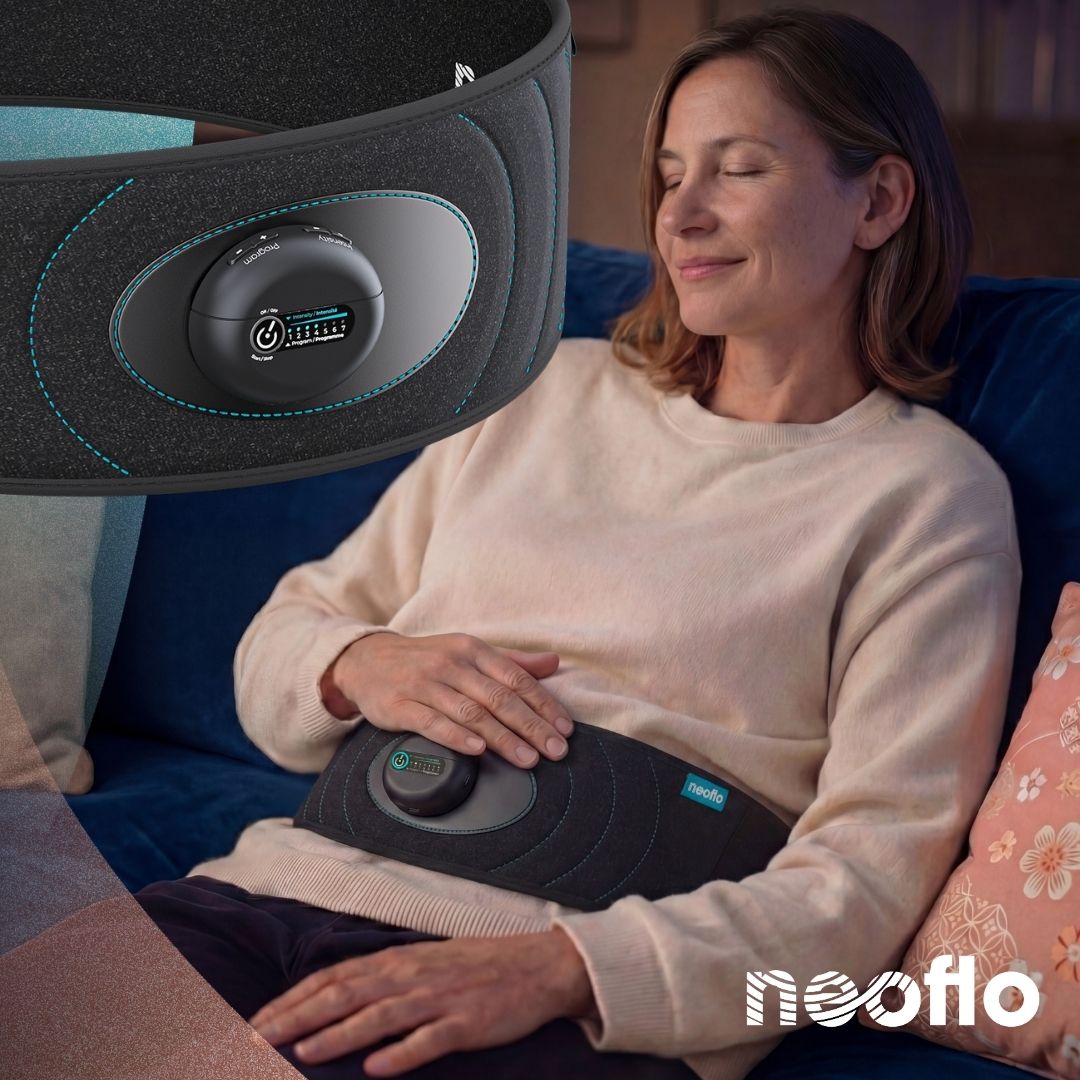
Breathe in through your nose for 5 seconds, then breathe out through your nose for 5 seconds (or through your mouth if that feels more natural). Don’t pause between the two. You can count in your head, use an app, or—if you’d rather not look at a screen before bed—let abreathing bandguidethe rhythm with haptic vibrations.
5. Hold it for 20 minutes, then let yourself drift off to sleep
When the 20 minutes are up, don’t sit up abruptly. If the session has brought you to the brink of sleep, let yourself drift off. Otherwise, stay lying down for a few more minutes, without your phone or any screens.
What sleep disorders coherent breathing help improve?
coherent breathing has been shown to be effective for several types of sleep disorders:
- Difficulty falling asleepdueto stress and mental overload. The effects are often noticeable as early as the first few sessions.
- Waking up in the middle of the nightaround3 or 4 a.m., often due to the nervous system going back into alert mode. A daily evening routine can help reduce and eventually eliminate these nighttime awakenings.
- Light, non-restorative sleep. Parasympathetic regulation promotes deep and REM sleep phases.
- Anxiety-related insomnia. Since coherent breathing also coherent breathing underlying anxiety (Lehrer 2020), it tackles both the cause and the symptom.
- Insomnia associated with depression. Tatschl and Schwerdtfeger (2020) documented a significant effect on depressive symptoms (d = 0.79), with a corresponding improvement in sleep.
- Mild to moderate sleep apnea. The journal *Zuo 2026* documents the beneficial effects of slow breathing on respiratory parameters (as a supplement to medical treatment, not as a replacement).
However, coherent breathing treat: sleep disorders of organic origin (severe sleep apnea, advanced restless legs syndrome), insomnia caused by medication, or severe circadian rhythm disorders (night shifts, chronic jet lag). In these cases, it remains a useful adjunct, but a medical evaluation is the priority.

The Neoflo Belt: Practice for 20 minutes with your eyes closed, without a screen
The practical challenge of practicing coherent breathing night isn’t technical—it’s mental. It’s very difficult to keep track of your breaths for 20 minutes without losing focus. And using a phone app right before bed exposes you to blue light and notifications—exactly what you’re trying to avoid.
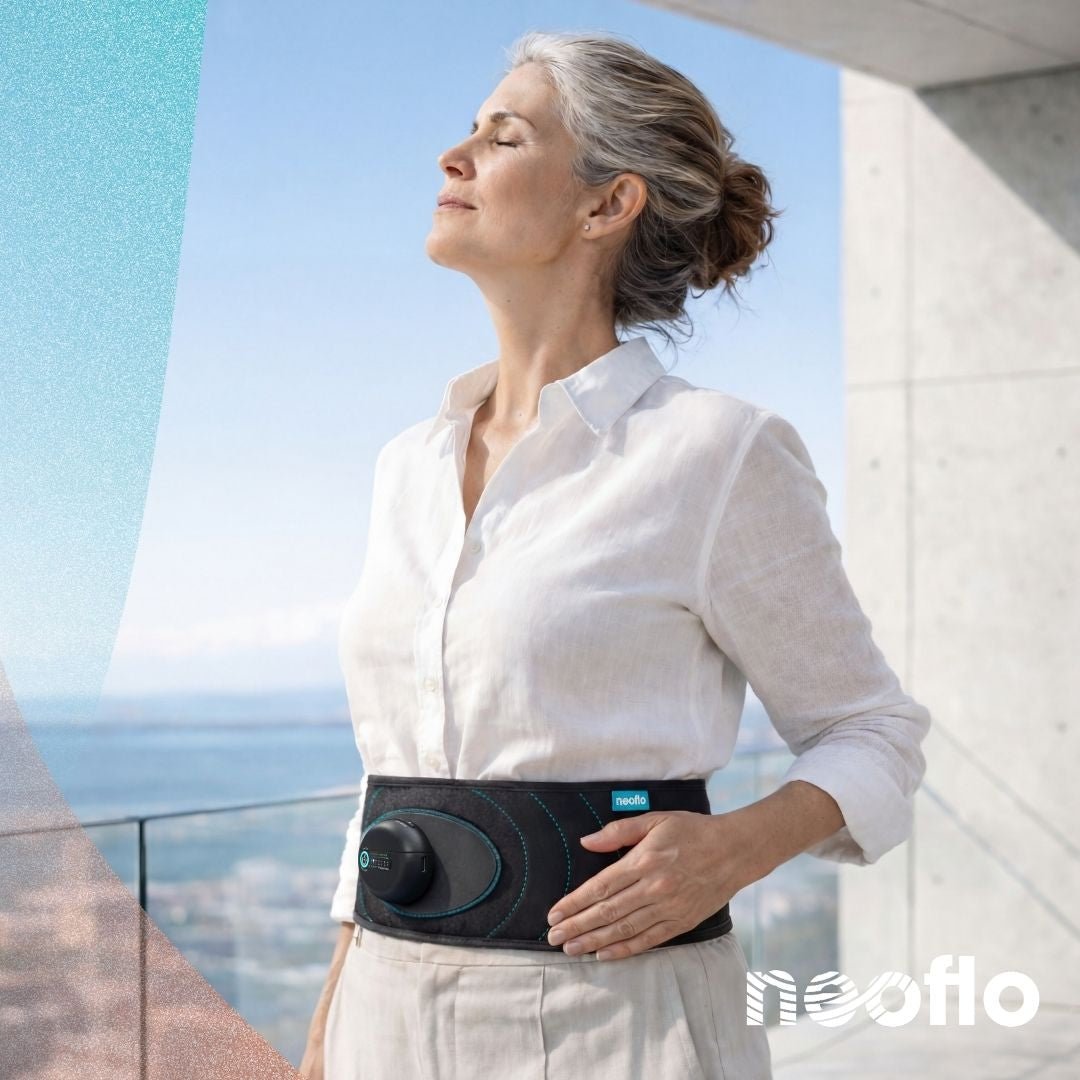
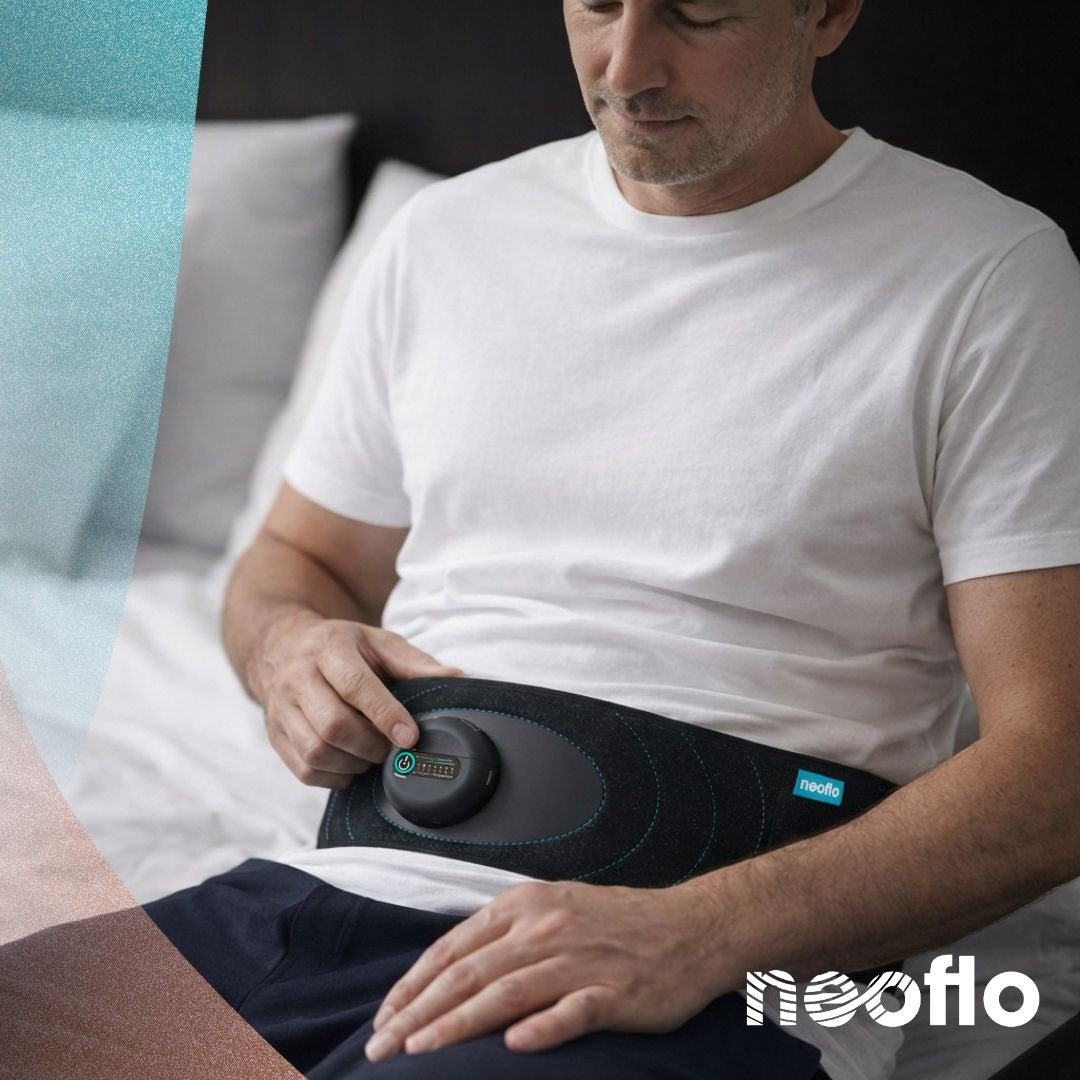
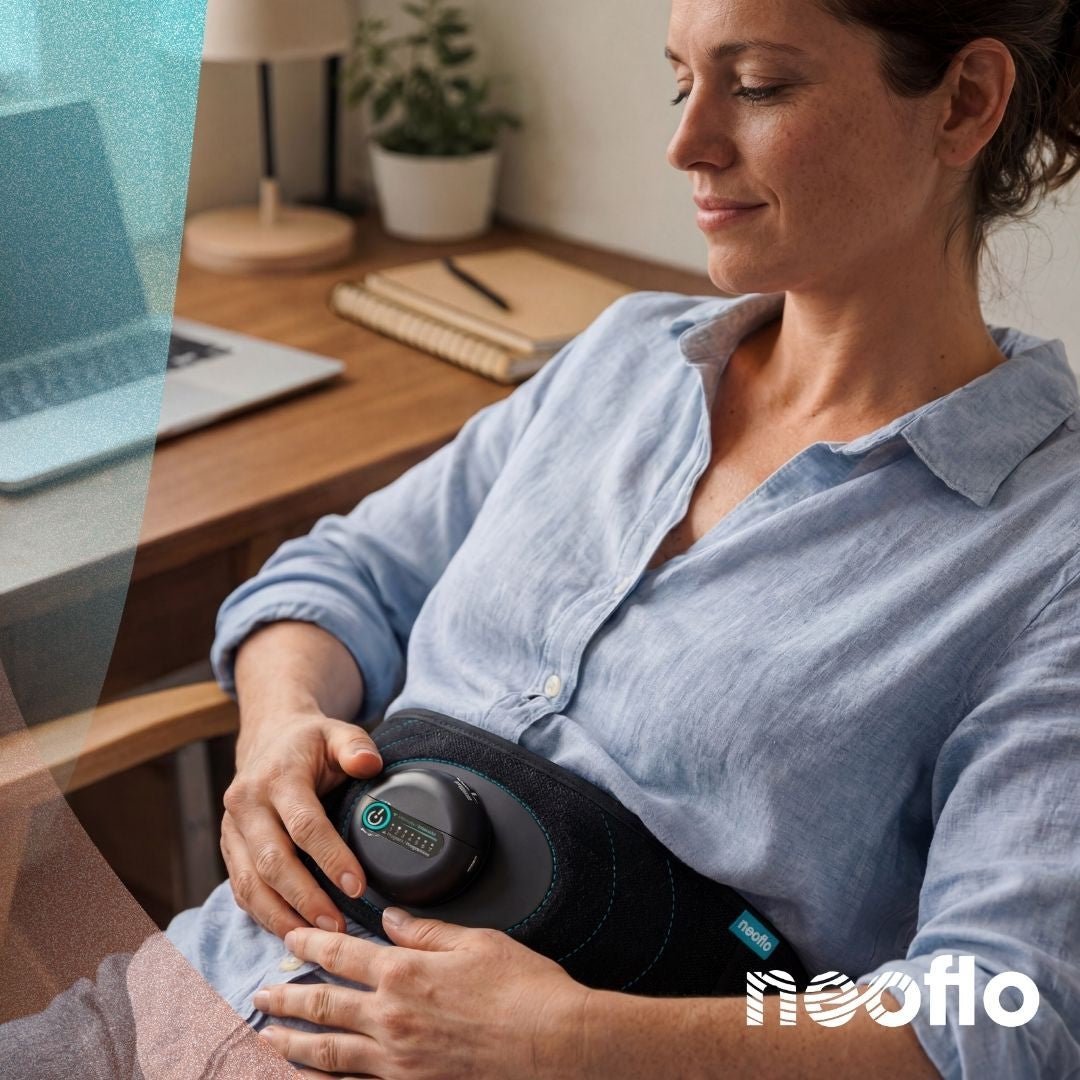
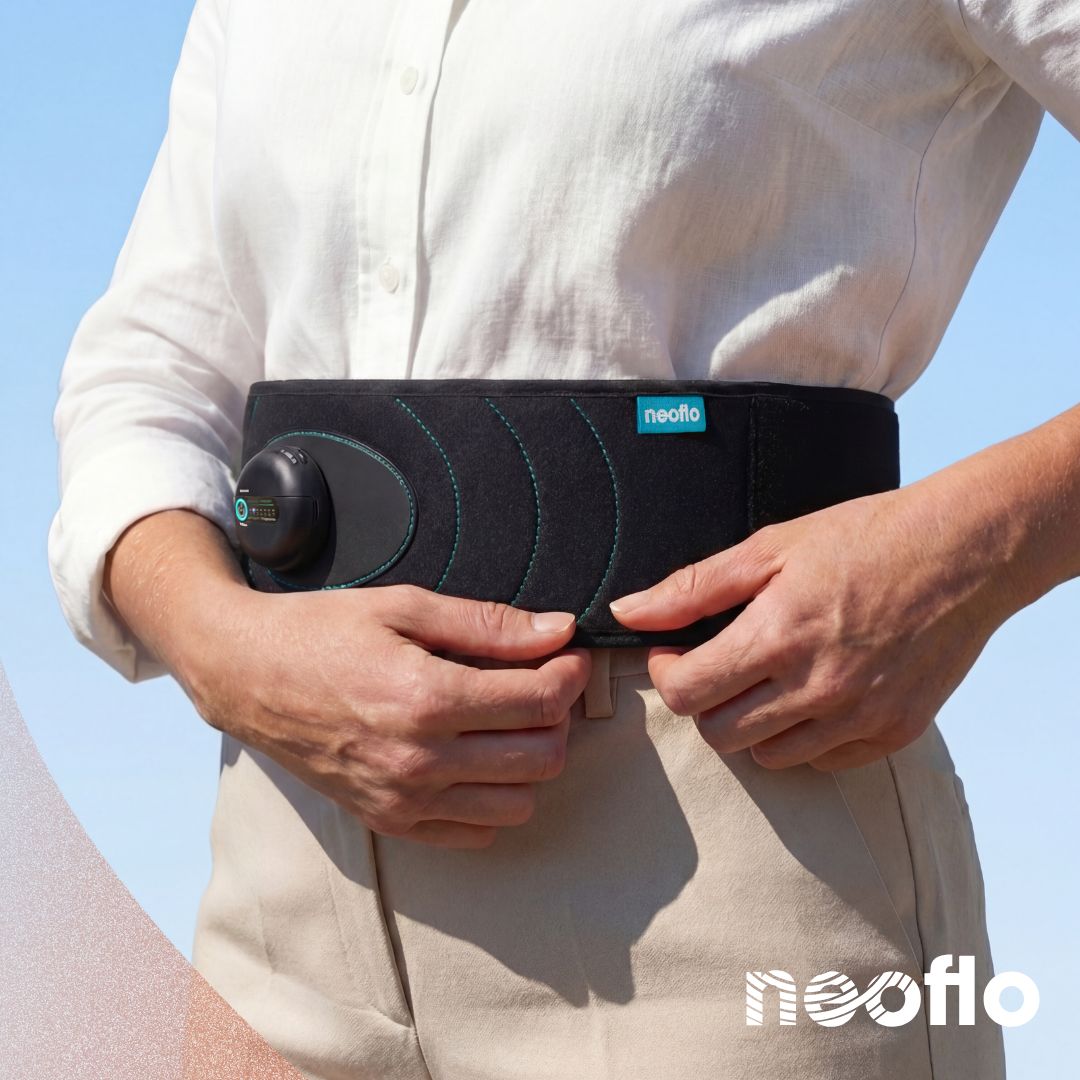
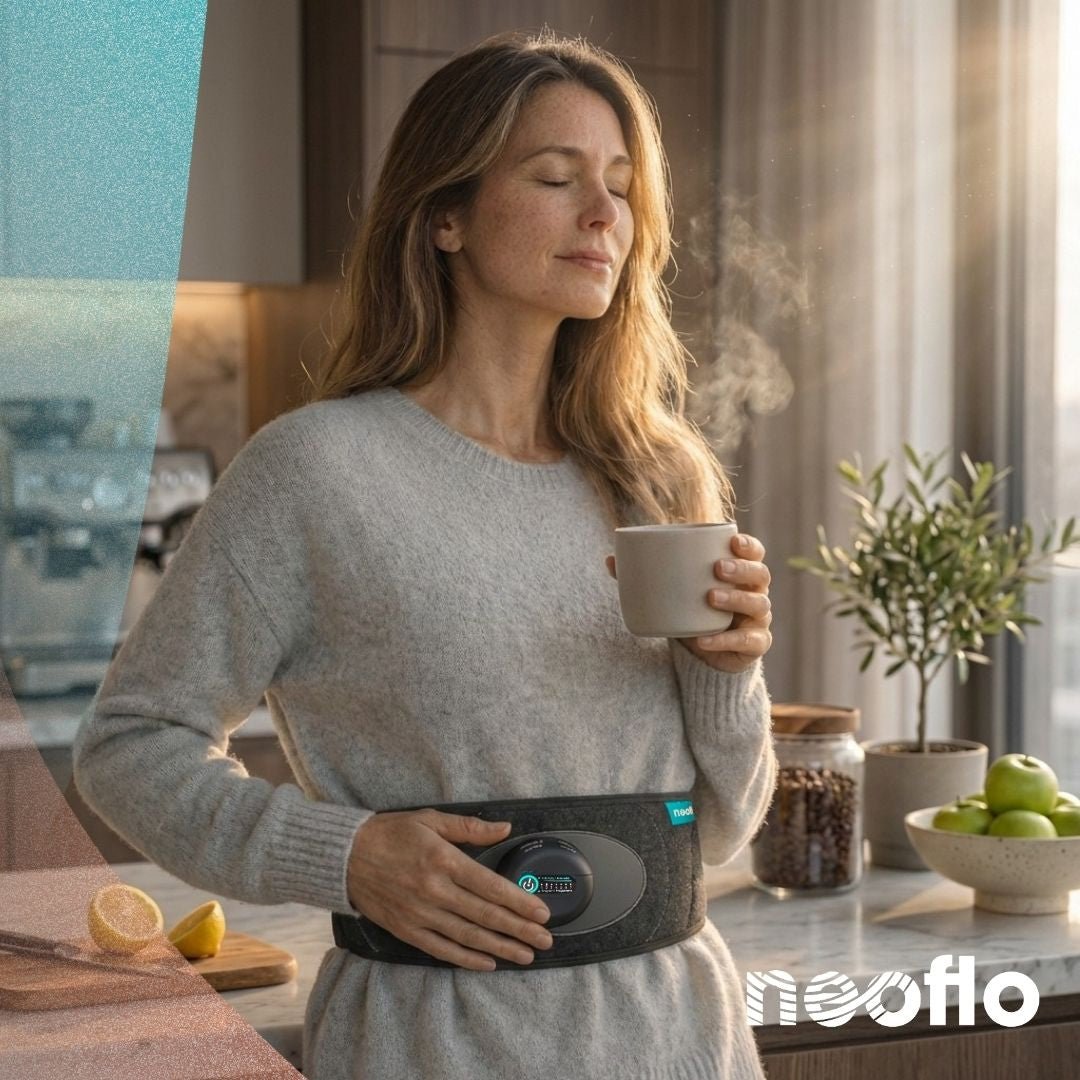
TheNeoflo breathing beltsolvesboth of these problems. Three haptic motors placed on your abdomen guide your breathing through touch. The device is completely separate from your phone. No screen, no app, no lights. You start the session, close your eyes, and 20 minutes later, your nervous system is in sleep mode.
L'étude de Bouny et al. (2023, revue Sensors) a démontré que le guidage tactile produit un index de cohérence cardiaque deux fois supérieur au guidage visuel (0,55 vs 0,28, p < 0,05). Le toucher guide mieux que l'écran — et le soir, c'est exactement ce qu'il faut.
The Neoflo belt comes with an8-week guidance programdesignedby Dr. Thomas Cantaloup, a specialist in sleep and mental health. It includes a specific "sleep" program and 7 intensity levels to suit all sensitivities.
Discover the Neoflo belt → 30-day “satisfaction guaranteed or your money back” trial, with free shipping and returns.

FAQ — Cardiac Coherence and Sleep
When should you practice coherent breathing sleep well?
Ideally,30 to 60 minutes before bedtime, or right in bed. This practice stimulates the parasympathetic nervous system, which physiologically prepares the body for sleep. Avoid doing it right after a heavy meal (the diaphragm needs to be able to move freely) or after intense physical activity.
How long does it take to see the effects on sleep?
Many people find it easier to fall asleep startingwith the very first sessions. Lasting effects on overall sleep quality and the elimination of nighttime awakenings become apparent after2 to 4 weeks of daily practicefor20 minutes. The 2019 Laborde study measured a significant improvement over 30 days.
Cardiac coherence: 5 minutes or 20 minutes to fall asleep?
Both durations have effects, but they are very different.Five minutesprovidestemporaryrelief—useful for calming a bout of stress before bed.Twenty minutesshiftsthe nervous system into a sustained parasympathetic state, which permanently alters sleep patterns. To treat chronic insomnia, science recommends the 20-minute session.
coherent breathing replace a sleeping pill?
For mild to moderate sleep disturbances caused by stress or anxiety, yes— coherent breathing produces results comparable to certain established treatments, without side effects or the risk of dependency.Never stop taking a prescribed sleep aid without consulting your doctor—stopping too abruptly can be dangerous. Talk to your doctor about gradually reducing your dosage while incorporating a daily breathing practice.
Can you do coherent breathing in bed?
Yes, absolutely. Practicing while lying down is actually ideal in the evening because it facilitates abdominal breathing (the belly expands naturally) and helps you drift off to sleep. With theNeoflo belt, this is actually the recommended position for the evening: with your eyes closed and the belt guiding your breath, you’ll often fall asleep before the session is over.
What should you do if you wake up at 3 a.m.?
Instead of checking the time, looking at your phone, or letting your mind wander (all of which can make you even more awake),do another 10- to 15-minute session of 5-5 breathing right in bed. Stimulating the parasympathetic nervous system may be enough to help you fall back asleep. If you wake up frequently during the night, you should practice this routine every evening for several weeks to retrain your nervous system.
Does coherent breathing for sleep apnea?
The journal *Zuo 2026* documents the beneficial effects of slow breathing on nocturnal respiratory parameters in cases of mild to moderate sleep apnea. It is intended as asupplementtomedical treatment (particularly CPAP for moderate to severe apnea), not a substitute. Consult your sleep specialist.
Take back control of your nights
Good sleep isn’t something you just decide to have—it’s something you prepare for. Twenty minutes of coherent breathing every night is the best-documented non-medicinal method for shifting a tired nervous system into recovery mode. TheNeoflo beltmakesthis practice simple and enjoyable—eyes closed, guided by touch, right in bed.

Discover the Neoflo belt → 30-day "money-back guarantee" trial.
neoflo is a wellness tool. It is not a medical device and is not a substitute for medical advice, diagnosis, or treatment. If you have persistent or severe sleep problems, consult a doctor or sleep specialist.