
Your heart races, your breath catches, you are caught in an uncontrollable inner storm. In the midst of an anxiety attack, every second seems like an eternity, and one question obsesses you: how can you calm an anxiety attack as quickly as possible?
In these moments of urgency, we dream of a quick and concrete solution to make us feel better. What if that solution was simply breathing?
La coherent breathing — behind this somewhat technical name — is a guided breathing method that could well become your lifeline. It's not a magic wand, but a serious technique endorsed by science and doctors to relieve stress.
Let's see how to put it into practice to regain your calm in the midst of turmoil.

What coherent breathing is coherent breathing and why it helps with anxiety)
coherent breathing aslow breathing techniquethat synchronizes the heart rate with the breathing rate in order to send a calming signal to the body. In a panic situation, the body goes into alarm mode (racing heart, shortness of breath, adrenaline rush). coherent breathing stop this reaction by pressing the brake on the nervous system via the vagus nerve—the large nerve that activates relaxation. In a few minutes, the pulse slows down, breathing deepens, and the mind calms down.

What science says: the vagus nerve, the heart, and stress hormones
From a scientific point of view,this type of breathing has a direct effect on our physiology. By stimulating the vagus nerve, it rebalances the nervous system and triggers the relaxation response (slowing heart rate, reduced tension, return to inner calm).
Studies have also measured a decrease in cortisol, the stress hormone, in those who practice coherent breathing. Conversely, a calming heart sends a reassuring signal to the brain—it has even been discovered that an excessively high heart rate can amplify anxiety. Science, without promising miracles, confirms that breathing properly can really reduce anxiety.

How to calm an anxiety attack with coherent breathing instructions)
What should you actually do when a crisis occurs? Here is a simple five-step protocol for using coherent breathing an anxiety episode:
-
Tell yourself that this is a temporary crisis. As frightening as they may be, your symptoms are not dangerous. Recognizing this can help reduce your fear and reassure you (for example, "It's just an anxiety attack, it will pass").
-
Get yourself physically safe. If possible, isolate yourself from the hubbub and sit down in a quiet place. Loosen anything that is constricting you (collar, belt) so that you can breathe more easily. Close your eyes if this helps you to refocus.
-
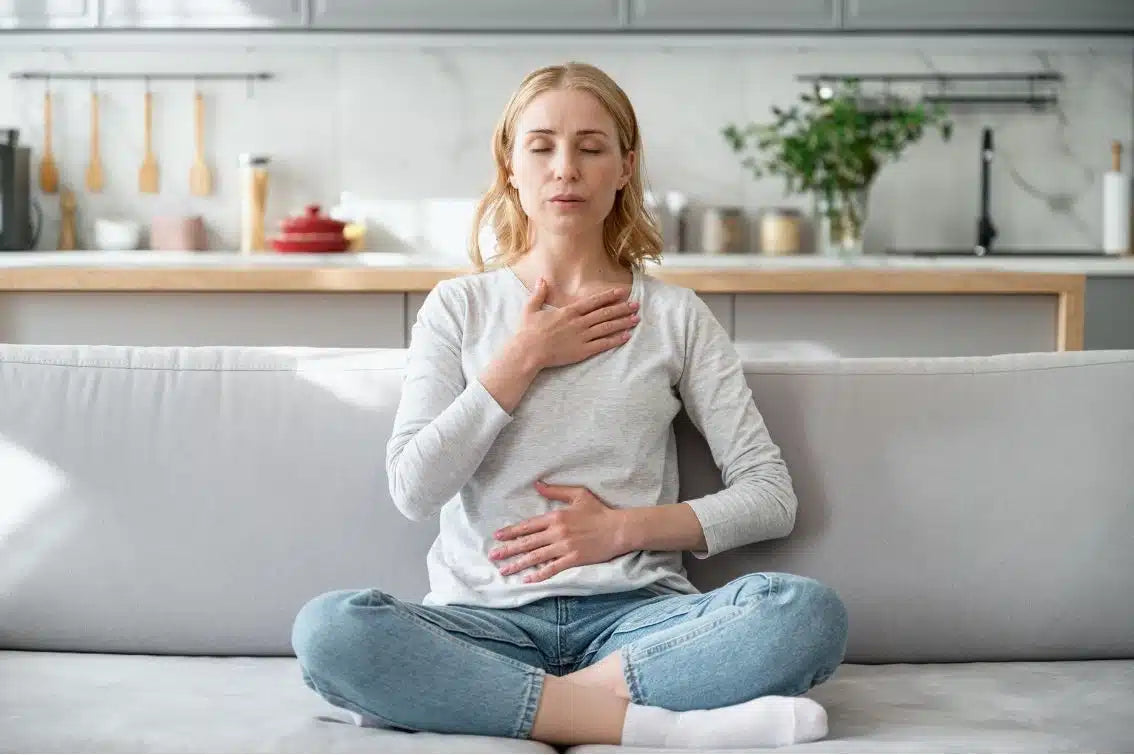
Breathe at a 4-6 rhythm. Place one hand on your stomach. Inhale slowly through your nose, counting to 4. Then exhale gently through your mouth for 6 seconds. Breathe steadily at this slow tempo (it doesn't matter if it's not exactly 4-6 seconds each time).
-
Continue for 10 to 15 minutes. Repeat these inhalations/exhalations for at least a few minutes. Focus on the air coming in and going out. If your mind wanders, gently bring your attention back to your counting and your hand rising on your stomach. Each slow exhalation sends a message of calm to your body, even if you don't feel it immediately.
-
Feel the panic subsiding. As the minutes pass, your heart rate should slow down and your breathing should become deeper. Some symptoms will ease (less intense palpitations, feeling of suffocation dissipating). Continue until the wave of anxiety subsides. Even if the anxiety does not disappear completely, you will gradually regain control of your body.
Practice coherent breathing to prevent anxiety attacks.
coherent breathing an emergency tool: it is also an anti-stress habit to cultivate on a daily basis. Practiced regularly, it can reduce anxiety over time.
Neuroscience experts recommenddaily practice for lasting effectson the nervous system. Ideally, 15-20 minute sessions for 8 weeks can reduce the area of the brain responsible for fear and anxiety attacks.
Why be so consistent?
Because the effects of a session only last a few hours, it is beneficial to repeat the exercise several times a day. Over time, many people find that their anxiety attacks become less frequent and less intense.
By improving your sleep and emotional balance on a daily basis, coherent breathing the risk of further panic attacks. Above all, by practicing when everything is fine, you will know how to react better when a crisis occurs: your body will recognize the path to calm more quickly.

A tool to guide you: the Neoflo breathing belt
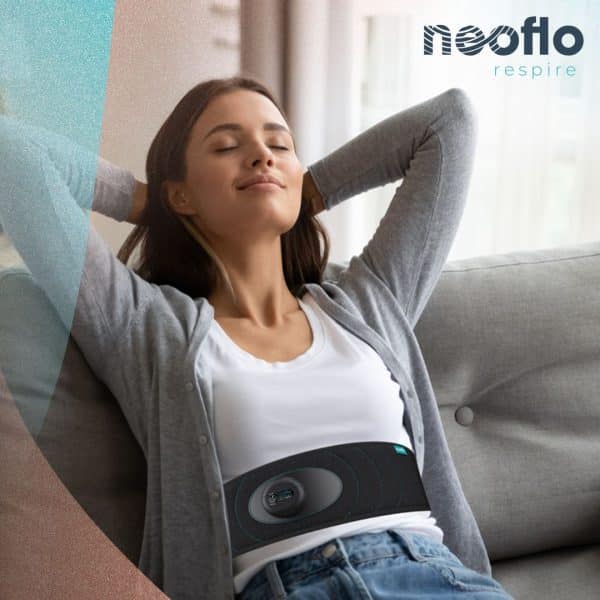
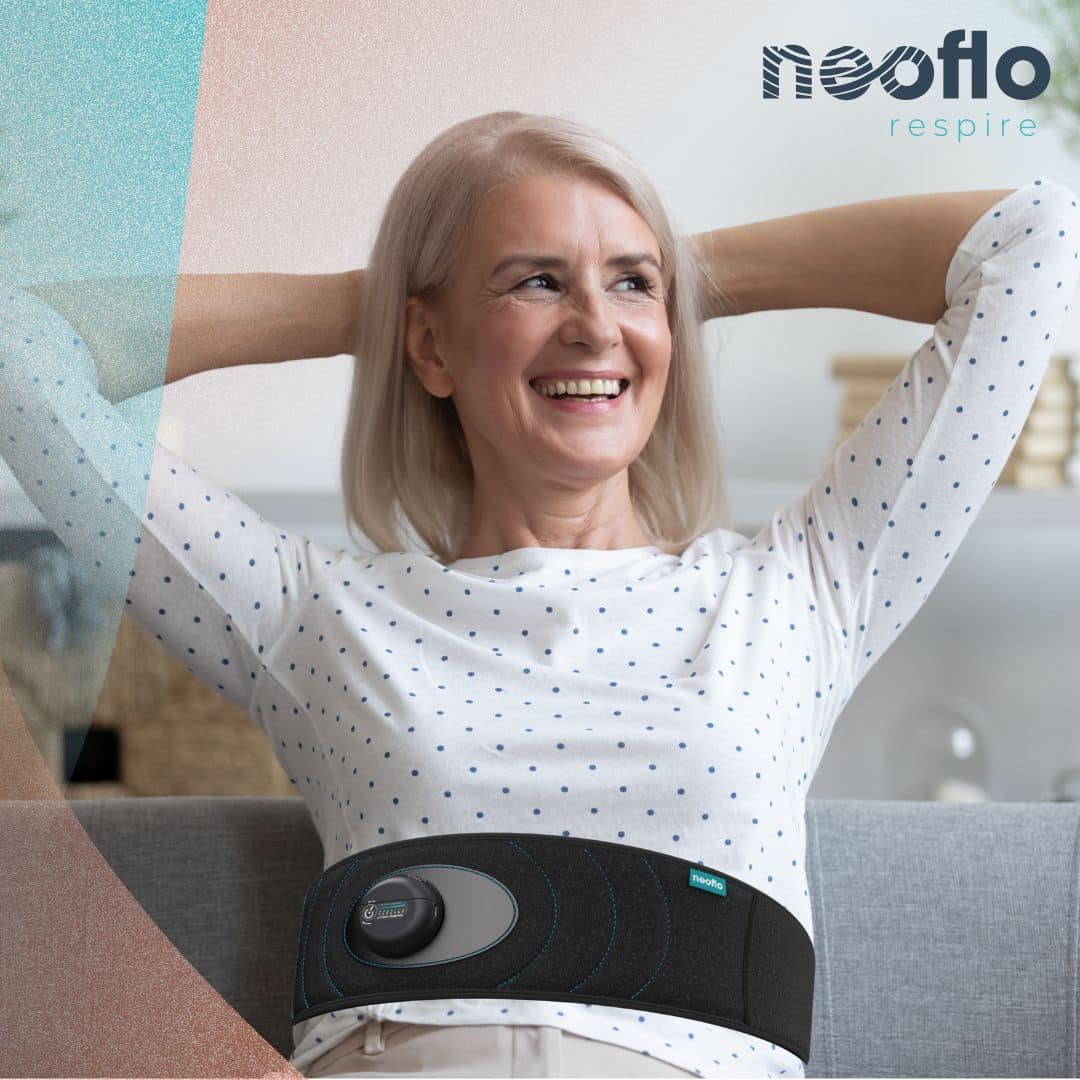
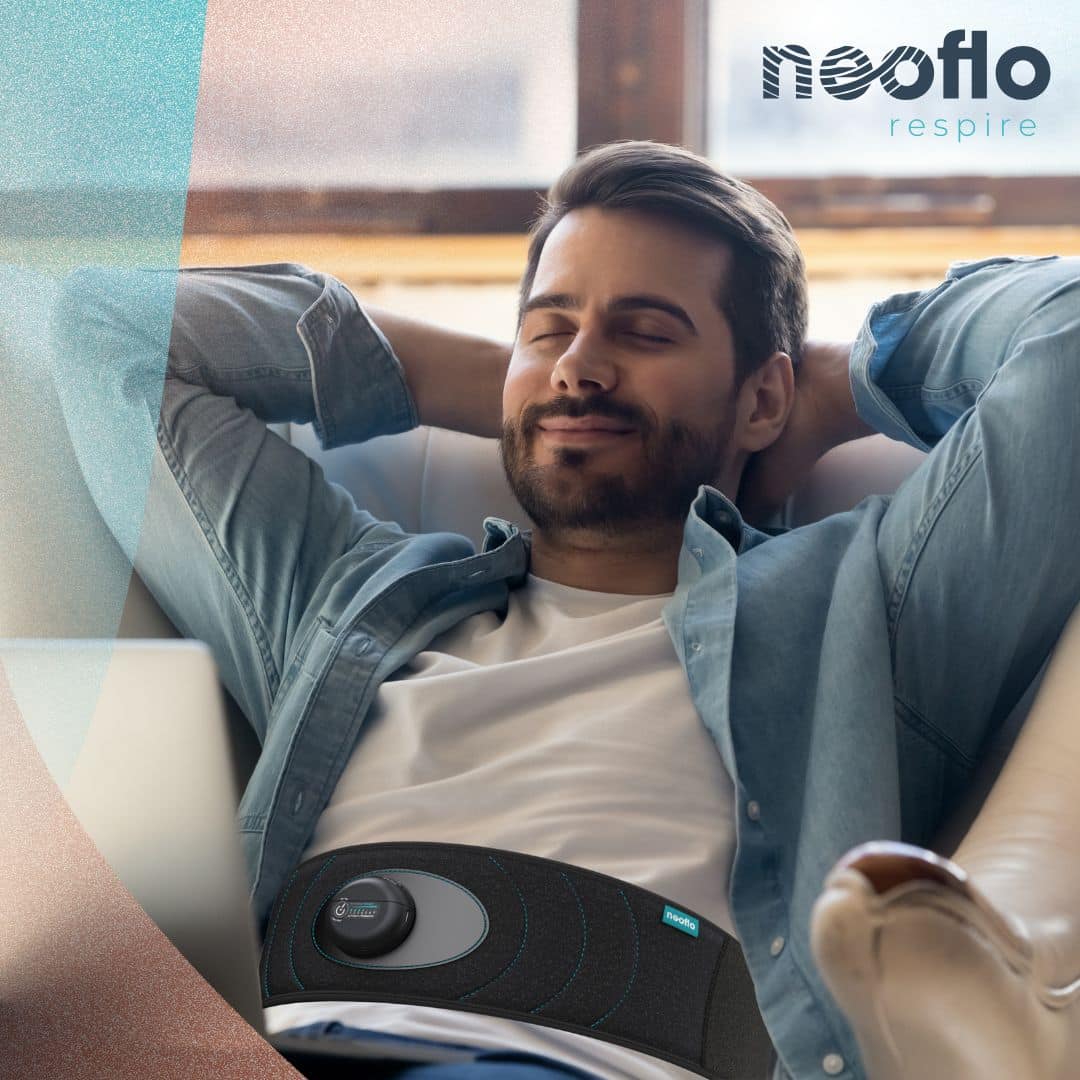
Of course, staying committed to these breathing exercises isn't always easy. Counting seconds or keeping your eyes on an app can become tedious... This is where aninnovative toollikethe Neoflo breathing beltcan help. This device is worn around the waist and guides your breathing with gentle vibrations: it tells you when to inhale and exhale, without a screen or mental effort. In short, the Neoflo belt acts as a personal breathing coach, helping you to practice regularly without constraint.

The advantage? You can use it anywhere, discreetly, and thus maintain a consistent training routine. On days when stress levels rise, simply activate the belt for a few minutes to regain control of your breathing and avoid escalating into panic.
Ultimately, remember that you have ways to calm your anxiety. coherent breathing, in particular, can help you regain control over panic attacks—especially if you make it part of your routine (with a little technological help from Neoflo, if needed). Once you master your breathing, it will become your best ally in weathering inner storms and regaining your calm.