Deep breathing: why start doing it?
Deep breathingis makinga strong comeback today. Although it may seem like an old wives' tale, this ancient technique has solid scientific backing. We are often advised to "take a deep breath" when we are stressed: this is not just a popular mantra,it is a method supported by science.
Today, practices such as coherent breathing are being revived and even recommended by healthcare professionals.
Between grandiose promises and wellness trends, does our breath deserve all this media hype?

What science says about deep breathing
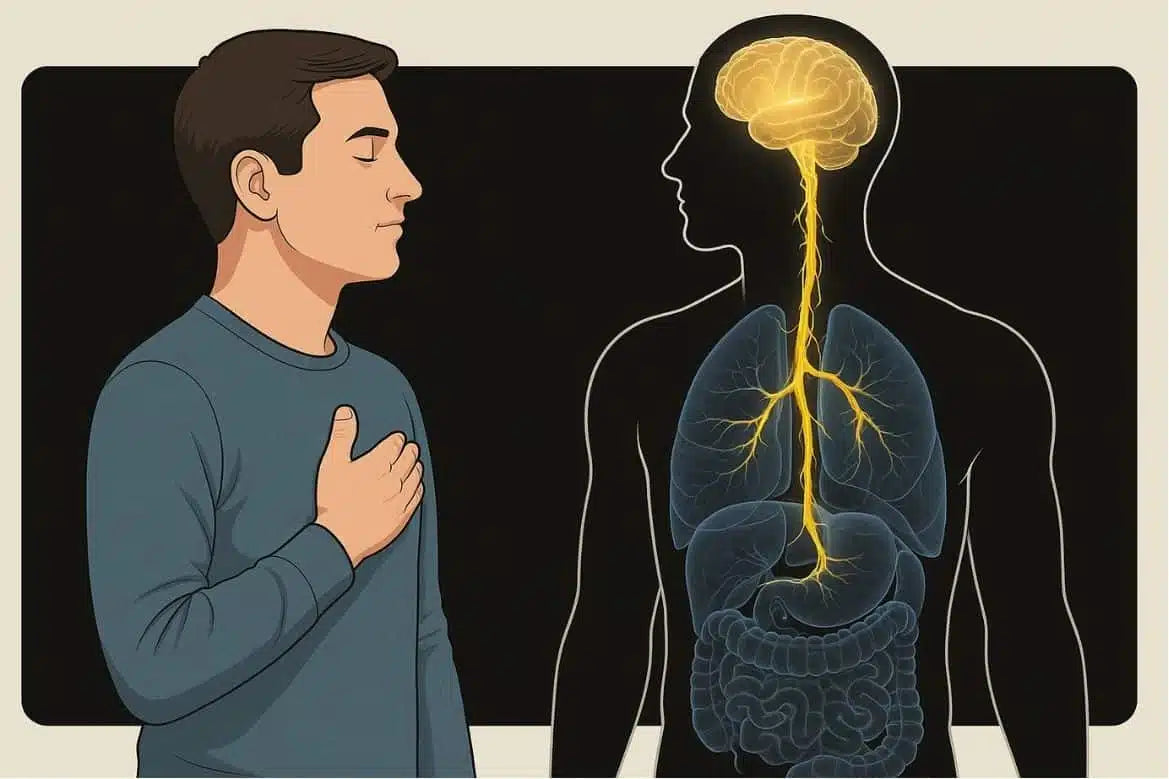
The main benefit of deep breathing comes from its physiological effects. By breathing slowly and deeply "from below" (diaphragmatic or abdominal breathing), we stimulate thevagus nerve,the parasympathetic nervous system's mega-cable. The latter acts as a natural brake: it slows down the heart, lowers blood pressure, and sendssoothing signalsthroughoutthe body. In other words, taking the time to breathe activates thebody'srest mode. Researchers confirm that "the longer and deeper the breath (~6 breaths per minute), the more the relaxing effects" of this system are activated. It's as if each deep breath presses a "pause" button in our nerves.

This breathing work also has a measurable impact on heart rate. In fact, our heart speeds up when we inhale and slows down when we exhale—this is known as respiratory sinus arrhythmia (RSA) or coherent breathing. The greater the amplitude of this cardiac oscillation, the better your cardiovascular and mental health: conversely, low RHR is often associated with high blood pressure, anxiety, and chronic stress.Doing slow breathing exercises (e.g., 5 seconds of inhalation/5 seconds of exhalation) increases this beneficial variability. It is no surprise that in France, coherent breathing recommended by cardiologists (see the article " coherent breathing, a technique..."onthe Inserm website).
On a cerebral and psychological level, breathing also influences our emotions. Neurologists have discovered a nerve circuit connecting the respiratory control center to the brain's arousal areas: this is one of the explanations for why "slow, controlled breathing can induce a state of calm." Other studies show that simplybeing aware of your breathingcanimprove your mood, memory, and concentration. In short, science points to profound effects: less stress, better mood, and even more restful sleep. A recent meta-analysis also notes "positive effects on stress, anxiety, and depressive symptoms" in people who practice conscious breathing.
The promises vs. the reality of deep breathing
Deep breathing is presented as an almost magical tool. Admittedly, its benefits are real: as the founder of the Brighton Breathwork Research Center points out, it is "one of the simplest and most profoundly effective tools we have for calming the nervous system.". In just a few minutes, a slow breathing exercise can lower blood pressure and dispel feelings of panic (studies even measure an immediate decrease in anxiety). But be careful not to set your expectations too high: it's not a miracle pill.
What it does: Activates the body's relaxation system and provides a quick mental break. Lasting changes through daily practice over several weeks.
What it does not do: Cure severe anxiety disorders on its own, resolve burnout with a wave of a magic wand, or replace therapy or medical treatment. Deep breathing can reduce tension or regulate daily stress, but underlying problems (trauma, chronic stress, etc.) often require complementary approaches (psychotherapy, exercise, healthy lifestyle).
In short, breathing calms stress in the moment—asCortexMag wrote, "practicing deep breathing exercises calms stress"—but it will not permanently erase the source of anxiety.
That's whyconsistency is key: it's not enough to breathe deeply once a month.You have to make it a habit. According to breathing exercise experts, practicing 10 to 20 minutes a day helps you get into the habit. Thanks to this consistency,the benefits become more and more lasting by activating brain neuroplasticity. But let's not forget: there is no miracle cure without effort. Breathe deeply, yes, but with consistency and regularity.

Who benefits most from deep breathing
Deep breathing isn't just for yoga gurus: in fact,everyonecanbenefit from it, and certain people are particularly receptive to it:
-
People who are anxious or stressed(e.g., executives under pressure, students before an exam, overwhelmed parents). These individuals often breathe quickly and poorly (chest shrunk). For them, slowing down their breathing creates a welcome break and helps break the cycle of hyperventilation and panic.
-
Insomniacs: before going to sleep, 20 minutes of coherent breathing to the body that it is time to relax. Activating the parasympathetic nervous system makes it easier to fall asleep for those who feelanxiousatbedtime.
-
People under chronic stress: intense work, heavy responsibilities (managers, caregivers experiencing early burnout, etc.). They benefit from a real release valve. Taking "breathing" breaks during the day (for example, 20 minutes of slow breathing) allows them to release accumulated tension without having to leave their desk.
-
Meditation enthusiasts and athletes: they have long used controlled breathing to optimize their performance and recovery. For example, incorporating calm abdominal breathing between two sets of exercise or during mental preparation improves concentration and endurance.
In fact, research shows that conscious breathing hasa wide range of benefits. National Geographic refers to"a slew of benefits": improved cardiovascular health, reduced anxiety, better mood, boosted cognitive function, and improved sleep quality. In short, if your body or mind is tense, chances are that deep breathing will do you some good.

How to practice deep breathing correctly
To get the most out of deep breathing, here are some practical tips:
-
Position: Sit comfortably with your back straight but relaxed. Keep your shoulders down and your head aligned. You can sit on a chair or lie on the floor, but avoid slouching.
-
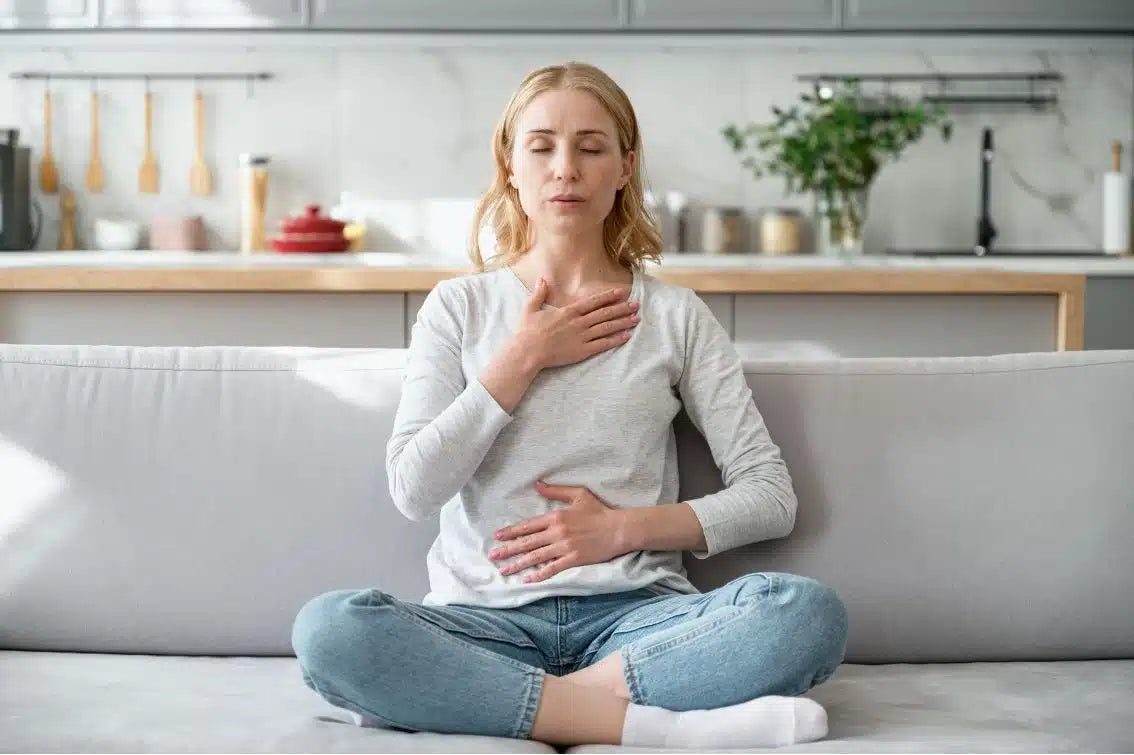
Abdominal breathing: place one hand on your stomach (below your sternum) and the other on your chest. Inhale slowly through your nose, gently inflating your lower abdomen without pushing your chest upward. (As Futura-Sciences advises, breathe"through your nostrils while inflating your stomach"to fill your lungs completely.)
-
Prolonged exhalation: then exhale slowly, 1.5 to 2 times longer than the inhalation. You can breathe out gently through your mouth as if blowing out a candle, or exhale through your nose if that is more comfortable. The idea is to empty your lungs completely and feel your stomach deflate.
-
Regular rhythm: maintain a steady rhythm. A good starting point is4 seconds of inhalation and 6 seconds of exhalation(i.e., 6 full breaths per minute). Other techniques (e.g., 5-5, 4-7, or 4-8) also work. The goal is to avoid holding your breath or straining: keep the movement fluid.
-
Daily practice: start with 5 to 10 minutes a day. As you get used to it, you can extend this to 15-20 minutes. The more regularly you practice, the more profound the beneficial effects will be.
Mistakes to avoid: don't force yourself by filling your chest excessively, as this can cause unnecessary tension. Also avoid breathing too shallowly (chest breathing) or, conversely, hyperventilating (breathing too quickly) – this will cancel out the relaxing effect. If you feel dizzy or uncomfortable, slow down or stop the session. Deep breathing should remain pleasant, without pain or discomfort.

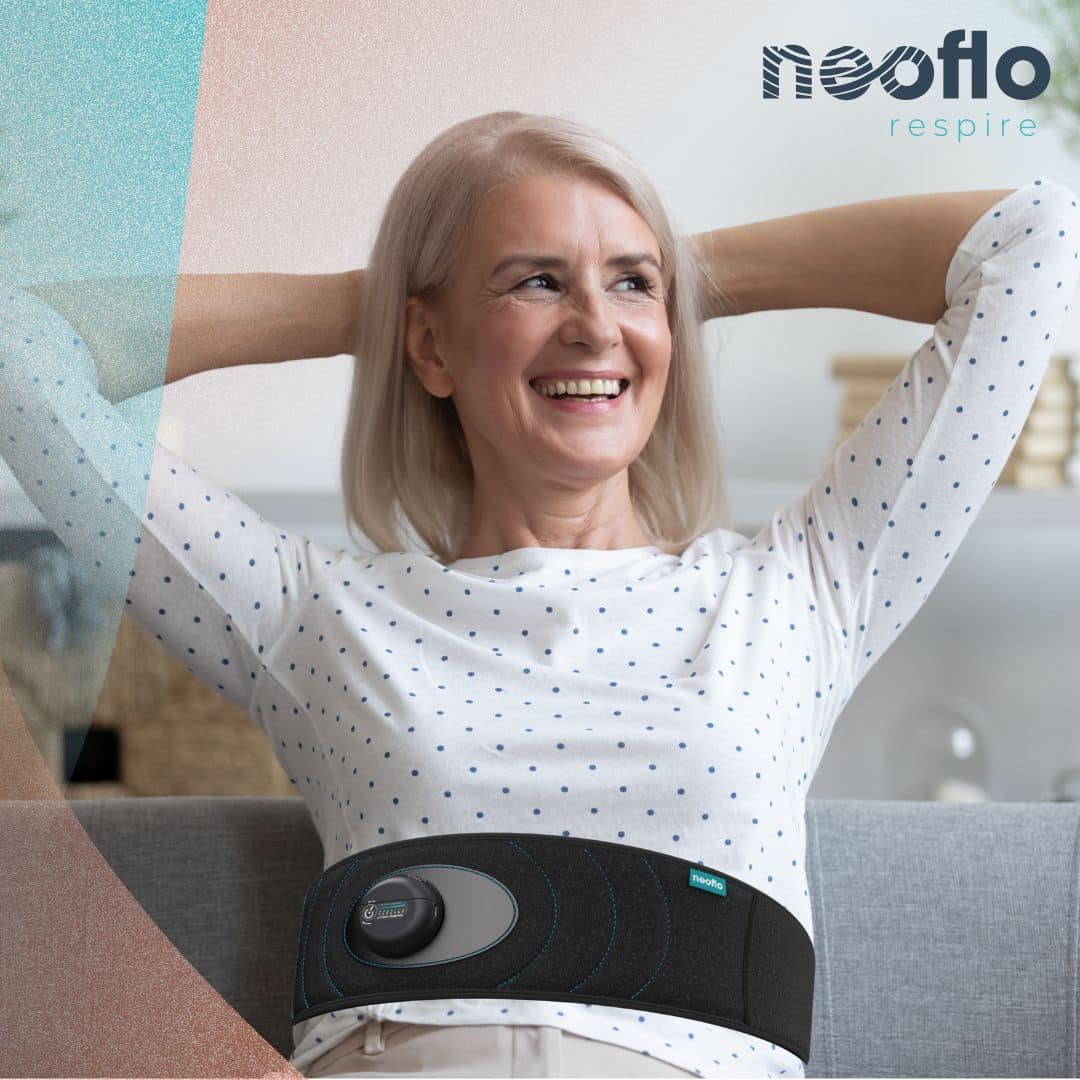
There are tools available to guide you. For example, the Neoflo breathing belt uses subtle tactile vibrations to set the rhythm for your inhalations and exhalations. This technology effectively guides coherent breathing abdominal breathing exercises (which is its purpose). By simply placing it around your abdomen and selecting a breathing program, you are guided with each breath: the belt helps youmaintain the right tempo without mental effort.
Discover the Neoflo breathing beltandenjoy the benefits of a real breathing coach. It's a bit like having a "personal calm coach" who sets the pace for you to disconnect and relax wherever you are.
In summary,deep breathingisa powerful and accessible tool for calming the body and mind. It is not a magic wand, but when practiced correctly and regularly, it offers a real breath of fresh air in everyday life and lasting benefits.