
Breathe to release the pressure
High blood pressure, often called the “silent killer,” affects nearly one in three adults. This modern scourge, often linked to stress, a sedentary lifestyle, or an unbalanced diet, continues to gain ground.

But what if the solution weren't just about medication or strict diets? What if your breathing could become your greatest ally—not as a replacement, but as a powerful complement to your treatment plan?
In this article, we explain why cardiac coherence is now considered one of the best-documented non-pharmacological treatments forstress-related hypertension, and how to practice it effectively.
Important: High blood pressure can go unnoticed for years while damaging your blood vessels. If you have high blood pressure, regular medical check-ups are essential. This article describes a complementary approach—it is never a substitute for medical care. Do not change any blood pressure medication without consulting your doctor.

Understanding Stress-Related High Blood Pressure
Under chronic stress, your autonomic nervous system shifts permanently into sympathetic mode (alertness, vigilance). Three mechanisms then cause blood pressure to rise:
- Your adrenal glands release cortisol and adrenaline, two hormones that speed up your heart rate and constrict your blood vessels.
- Your resting heart rate increases, raising your cardiac output.
- Your arteries constrict (vasoconstriction), increasing resistance to blood flow.
When this response—which is beneficial in the short term—fails to subside, blood pressure remains elevated by default. This is how essential hypertension develops (accounting for more than 90% of hypertension cases). Chronic stress is one of the best-documented contributing factors.
Good news: this process is reversible. The autonomic nervous system can be trained, and breathing is the only autonomic function we can control voluntarily. This is precisely the key to cardiac coherence.
Cardiac coherence and hypertension: the physiological link
During a cardiac coherence session, by breathing at a rate of 6 breaths per minute, you synchronize with the cardiovascular baroreflex. This synchronization sends a powerful signal to the vagus nerve, the main pathway of the parasympathetic nervous system.
The ripple effects on hypertension:
- Activation of the parasympathetic nervous system: slowed heart rate, vasodilation, and lower blood pressure.
- Restoration of baroreflex sensitivity: the reflex that automatically regulates blood pressure returns to normal.
- Reduced sympathetic tone: less adrenaline, less cortisol, less cardiovascular stimulation.
- Improved heart rate variability (HRV): a direct indicator of cardiovascular health and nervous system resilience.
- Reduction in cortisol: Excess levels of this stress hormone contribute to increased blood pressure (Ma 2017).

Solid evidence: what the meta-analyses show
The effect of slow breathing on blood pressure is now one of the best-documented in integrative medicine. Three key studies to be aware of:
Cheng et al. (2026, meta-analysis — 13 studies, 1,097 patients)
Published in *Clinical Cardiology*, this recent meta-analysis synthesizes 13 randomized controlled trials involving 1,097 patients with hypertension. The result: an average decrease of 7.7 mmHg in systolic blood pressure among patients who practice slow breathing daily. By way of comparison, this is on par with the effect of a first-line antihypertensive drug used as monotherapy.
Ubolsakka-Jones et al. (2019)
Published in *Physiotherapy Research International*, this study measured the effect of 8 weeks of slow breathing with inspiratory resistance in patients with isolated systolic hypertension. The researchers observed a decrease of up to 22 mmHg in systolic blood pressure among participants who adhered to the regimen—a remarkable result.
Lehrer et al. (2020, meta-analysis — 58 RCTs)
This landmark meta-analysis on HRV biofeedback (which includes cardiac coherence) documents a "moderate to significant" effect on cardiovascular parameters, including blood pressure, resting heart rate, and heart rate variability.
In nearly all of these studies, the exercises were performed daily, for 15 to 30 minutes per session, over a period of 8 to 12 weeks. It is this protocol that produced the figures above.
To learn more about this scientific topic, you can watch our webinar featuring a neuroscience researcher from INSERM and download our full report: The Science of Breathing to Relieve Stress Symptoms.
It's all about the duration: 5 minutes vs. 20 minutes
All over the internet, you read that you should practice cardiac coherence for 5 minutes, 3 times a day (the famous 365 method). It’s easy to remember, but that’s not the frequency that science has validated for achieving a lasting reduction in blood pressure.

The Kwon 2025 meta-analysis (48 clinical trials) makes it clear: the effects are dose-dependent.
- 5 minutes = immediate effect. Blood pressure drops during and immediately after the session. However, the effect does not last over time. There is no change in baseline blood pressure.
- 15 to 20 minutes = the dose used in clinical trials. This is what produces a lasting change in resting blood pressure. When performed daily for 8 to 12 weeks, it can result in a reduction of 7.7 mmHg (Cheng 2026) or even 22 mmHg (Ubolsakka-Jones 2019).
It is this 20-minute session that neoflo refers to as the vagus nerve deep breathing : the standardized, scientifically validated version, as opposed to the 5-minute method popularized online, which produces only a temporary soothing effect.

How to lower your blood pressure: a daily routine
The rhythm
Inhale through your nose for 5 seconds, then exhale through your nose or mouth for 5 seconds. No pause in between. That’s 6 cycles per minute—the baroreflex resonance frequency that maximizes the effect on blood pressure.
The type of breathing
Breathe from your abdomen, not your chest. Your belly expands as you inhale and contracts as you exhale. The diaphragm is the muscle that should be doing the work—it’s what stimulates the vagus nerve. See our complete guide to abdominal breathing.
Duration and frequency
20 minutes a day, ideally at a set time. The most effective time for high blood pressure:
- First thing in the morning —before the morning cortisol spike—to start the day with a balanced nervous system.
- In the evening before bedtime —to combine the stress-relieving and sleep-inducing effects. This is particularly helpful if you also suffer from stress-related insomnia (which is often associated with high blood pressure).
- Split sessions: Some clinical protocols divide the treatment into two 10-minute sessions (morning and evening).
The duration of the program
First noticeable reduction: often within 2 to 4 weeks. Stable and long-lasting results: 8 to 12 weeks. Maintenance after this phase: 15–20 minutes a day to prevent a relapse.
Voltage Monitoring
Check your blood pressure at the same time each day, ideally in the morning and evening, using an approved automatic blood pressure monitor. Keep a log for 4 to 8 weeks to objectively track the decrease. Share this data with your doctor—it can also be a useful tool if they are considering reducing your medication.
When should you see a doctor?
High blood pressure should never be managed entirely on your own. See your doctor if:
- You notice high blood pressure readings (repeatedly systolic > 140 mmHg or diastolic > 90 mmHg).
- Your numbers are going up despite your treatment.
- You are experiencing unusual symptoms (persistent headaches, dizziness, chest pain, shortness of breath during physical activity).
- If you are considering reducing or stopping your blood pressure medication, never do so without consulting a doctor.
Cardiac coherence is a complementary approach to your medical care, never a substitute for it. Several studies (Hopper 2019, Cheng 2026) suggest that regular practice allows some patients to reduce their dosage or even stop their medication in cases of mild hypertension— under strict medical supervision.

neoflo : Just 20 Minutes a Day, Effortlessly
The practical challenge of cardiac coherence for hypertension isn't the technical difficulty—it's maintaining consistency over 8 to 12 weeks. Clinical trials are clear: the patients who achieve a reduction in blood pressure are those who stick to their daily sessions without missing a day.
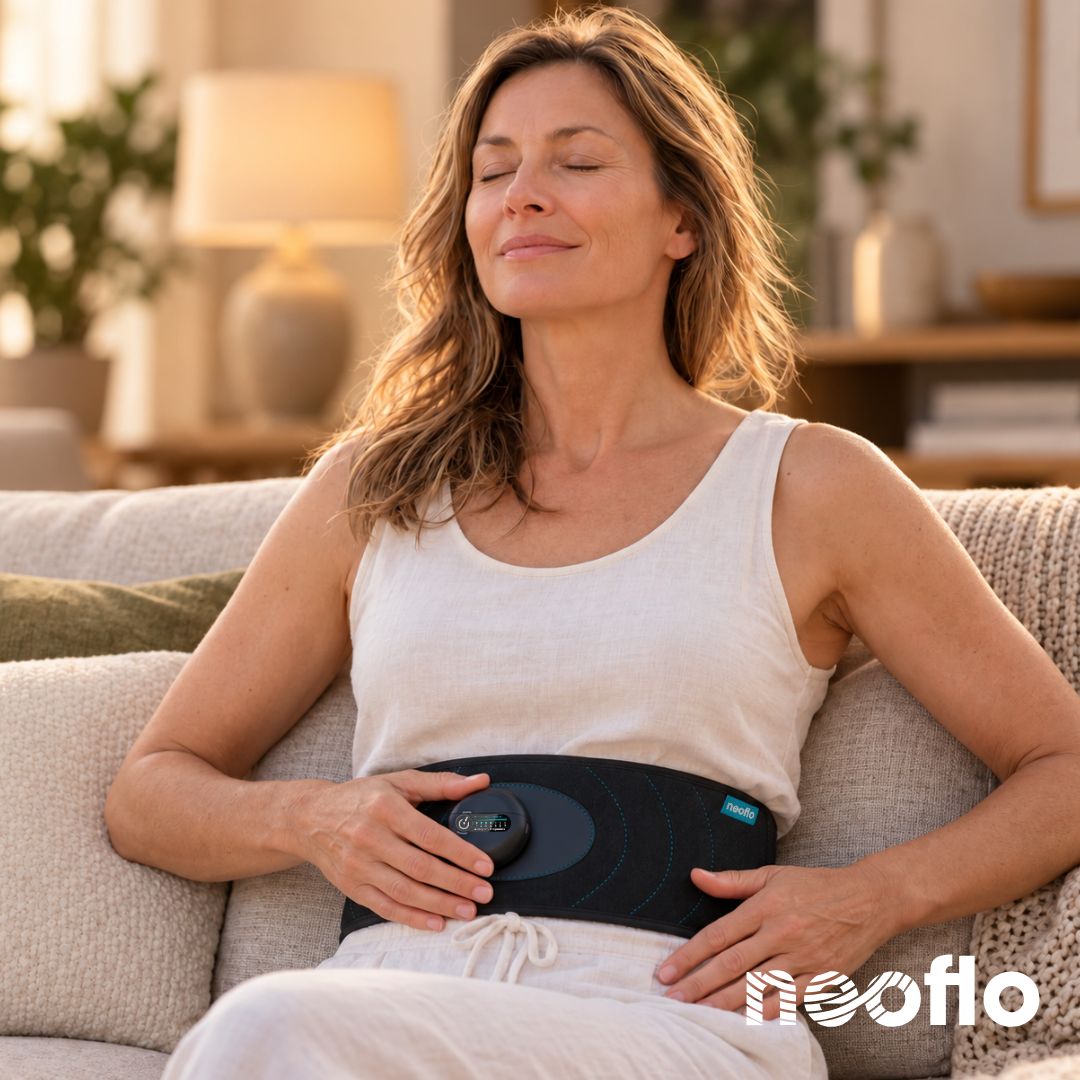
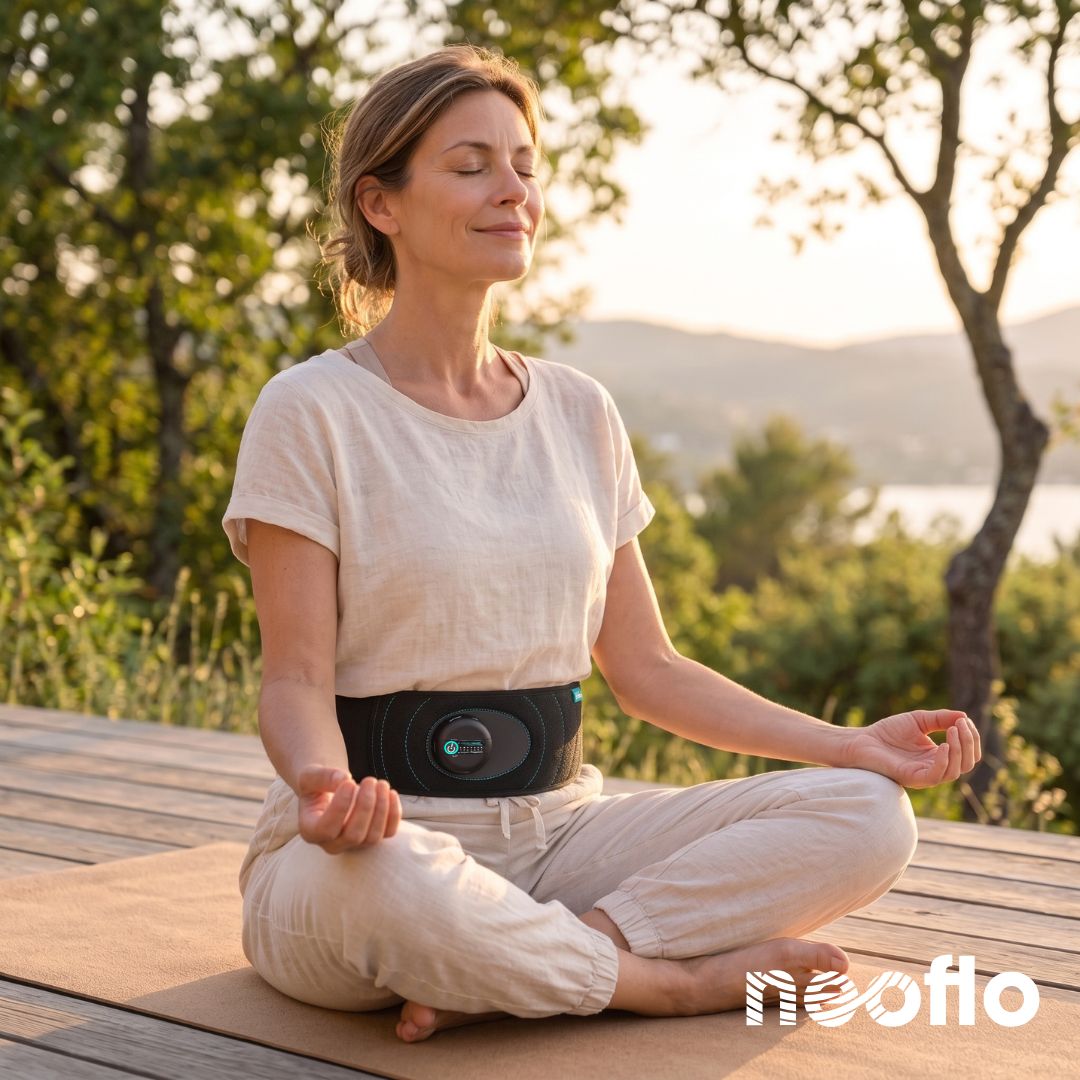
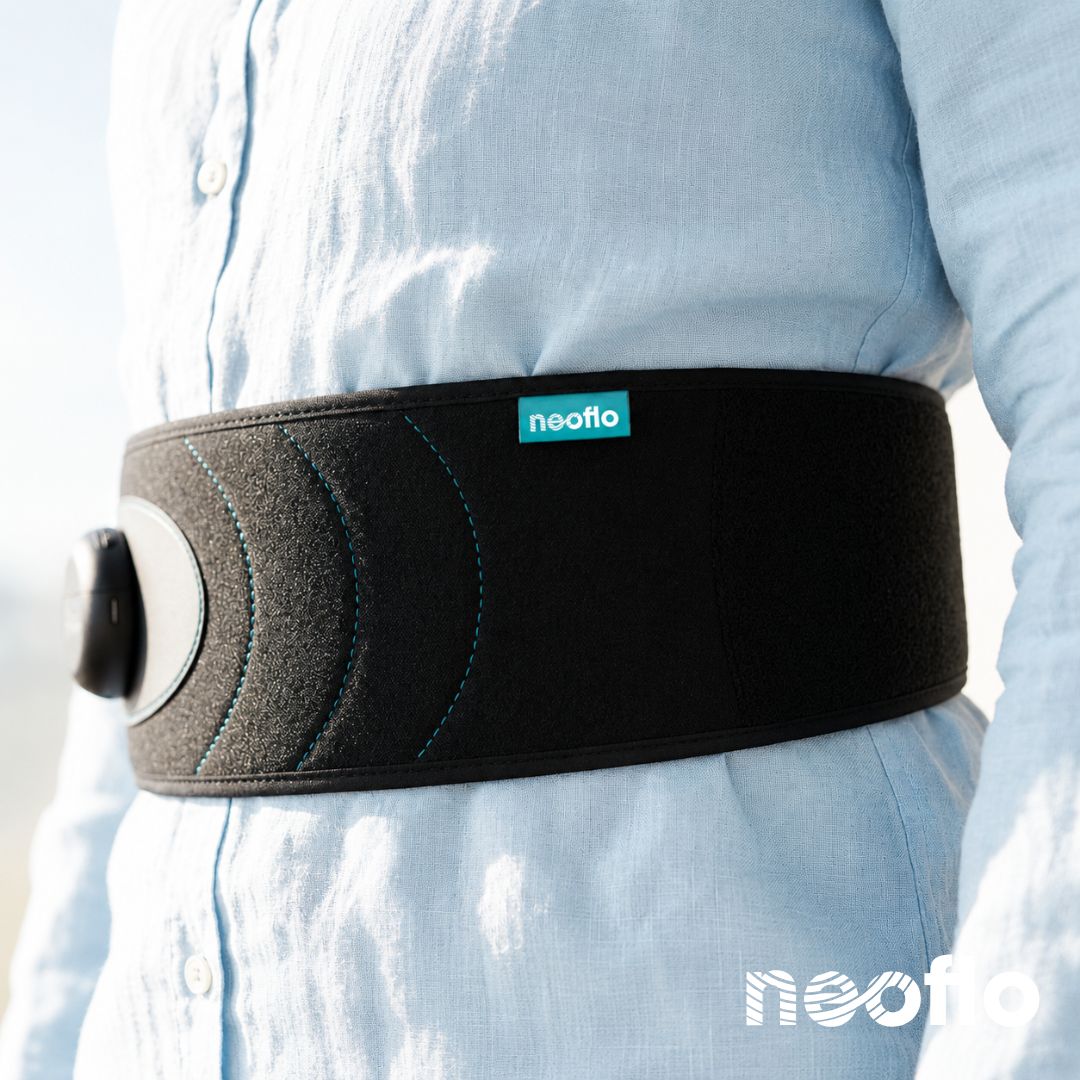
neoflo 's breathing belt was designed specifically to make this practice sustainable. Three haptic motors placed on your abdomen guide your breathing through touch—no screen, no app. You start the session, close your eyes, and 20 minutes later, your nervous system has really been put to work.

L'étude Bouny et al. (2023, revue Sensors) a démontré que le guidage tactile produit un index de cohérence cardiaque deux fois supérieur au guidage visuel (0,55 vs 0,28, p < 0,05) — décisif pour atteindre la dose efficace.
The belt comes with an 8-week program designed by Dr. Thomas Cantaloup, a specialist in sleep and mental health—exactly the recommended duration for observing a clinically significant reduction in blood pressure. Designed by a biomedical engineer (Philippe Cortès). Bronze medal at the 2024 Lépine Competition.

Turn your breath into a weapon against high blood pressure
High blood pressure is a silent battle, but you have tools at your fingertips to fight it. The vagus nerve deep breathing, simple, and accessible, offers a natural solution to reduce your stress, improve your cardiovascular health, and regain control—as a supplement to your medical care, never as a replacement.
With the neoflo breathing belt, this practice becomes easy and enjoyable to maintain on a daily basis for the 8 to 12 weeks needed to observe clinically measurable effects.
So don't wait any longer: breathe in, breathe out… and let go of the pressure.
Discover the " vagus nerve deep breathing " with neoflo
20 minutes a day of touch-guided breathing. No screens, no effort. The scientifically proven practice of cardiac coherence, finally achievable in everyday life.
- ✓ 30-day "money-back guarantee" trial
- ✓ Free shipping within 48 hours
- ✓ 2-year warranty
- ✓ Designed by a biomedical engineer and a physician
- ✓ Bronze Medal, 2024 Lépine Competition
Discover the " neoflo " belt →
neoflo This is not a medical device and is not a substitute for medical advice, a diagnosis, or antihypertensive treatment. If you have been diagnosed with high blood pressure, your doctor remains your primary point of contact. Do not change any treatment without your doctor’s approval.