
Your breath becomes an invisible pain
No one can see it. You are motionless, seemingly calm. And yet... a silent struggle is raging inside you.
Your breathing is rapid and irregular. You feel pressure in your chest, a lack of air in your lungs, and a discomfort that’s hard to describe. You feel like you’re having trouble breathing, with no clear medical cause. It’s not asthma. Nor is it a heart problem. But anxiety. Insidious. Widespread.
This sensation is one of the most common —and most misunderstood— physical symptoms of anxiety disorders.

Feeling short of breath and generally anxious: stress messes with your nervous system
Chronic anxiety activates what is known as the sympathetic nervous system: the “fight-or-flight” response, which causes you to flee from danger. But in the case of an anxiety disorder, there is no real danger—just a body that reacts as if your life were at stake. This is a sign of a dysregulation of the autonomic nervous system. The result:
- Shallow or blocked breathing
- Unintentional hyperventilation
- A feeling of suffocation or a lump in the throat—sometimes leading to a panic attack
- Increased heart rate
- Uncontrollable thoughts
And when this becomes a daily occurrence, it affects your sleep, your concentration, your digestion, and even your ability to make simple decisions. In short: your entire quality of life is turned upside down.

Regaining control... starting with your breathing
There is a way to turn off this bodily alarm.
It’s not magic. It’s not all in your head. It’s physiological.
It’s called coherent breathing.
This is a slow breathing technique (6 cycles per minute) that synchronizes your heartbeat with your breath, stimulating the vagus nerve—that super-nerve that acts as a natural brake on stress.

What science says (and why it works)
Dozens of studies since 2010 have confirmed this: practicing coherent breathing trains your nervous system to return to a state of balance.
The definitive meta-analysis (Lehrer 2020, 58 randomized clinical trials) documents an effect on anxiety that is “comparable to established treatments.” The benefits are substantial, measurable, and long-lasting:
✔️ Reduction in chronic anxiety
✔️ Decrease in cortisol levels in the hours following a session (Ma 2017)
✔️ Improved heart rate variability (HRV), a key indicator of physiological resilience
✔️ Stimulation of the anti-inflammatory vagal pathway
✔️ Deeper, more restorative sleep (Laborde 2019)
✔️ Reduction in stress-related digestive symptoms

The Neoflo Protocol: Deep Cardiac Coherence™ — not 5 minutes, but a full 20 minutes of calm
At neoflo, we do not recommend 5-minute micro-sessions.
Why?
Because research shows that the true vagal and neurophysiological benefits begin to appear after 15 to 20 minutes of continuous breathing. It is precisely this duration that we call Deep Cardiac Coherence™: the practice standardized by science and validated by over 100 clinical trials (Lehrer 2020, Kwon 2025), as opposed to the 5-minute sessions popularized online, which produce only temporary relief.
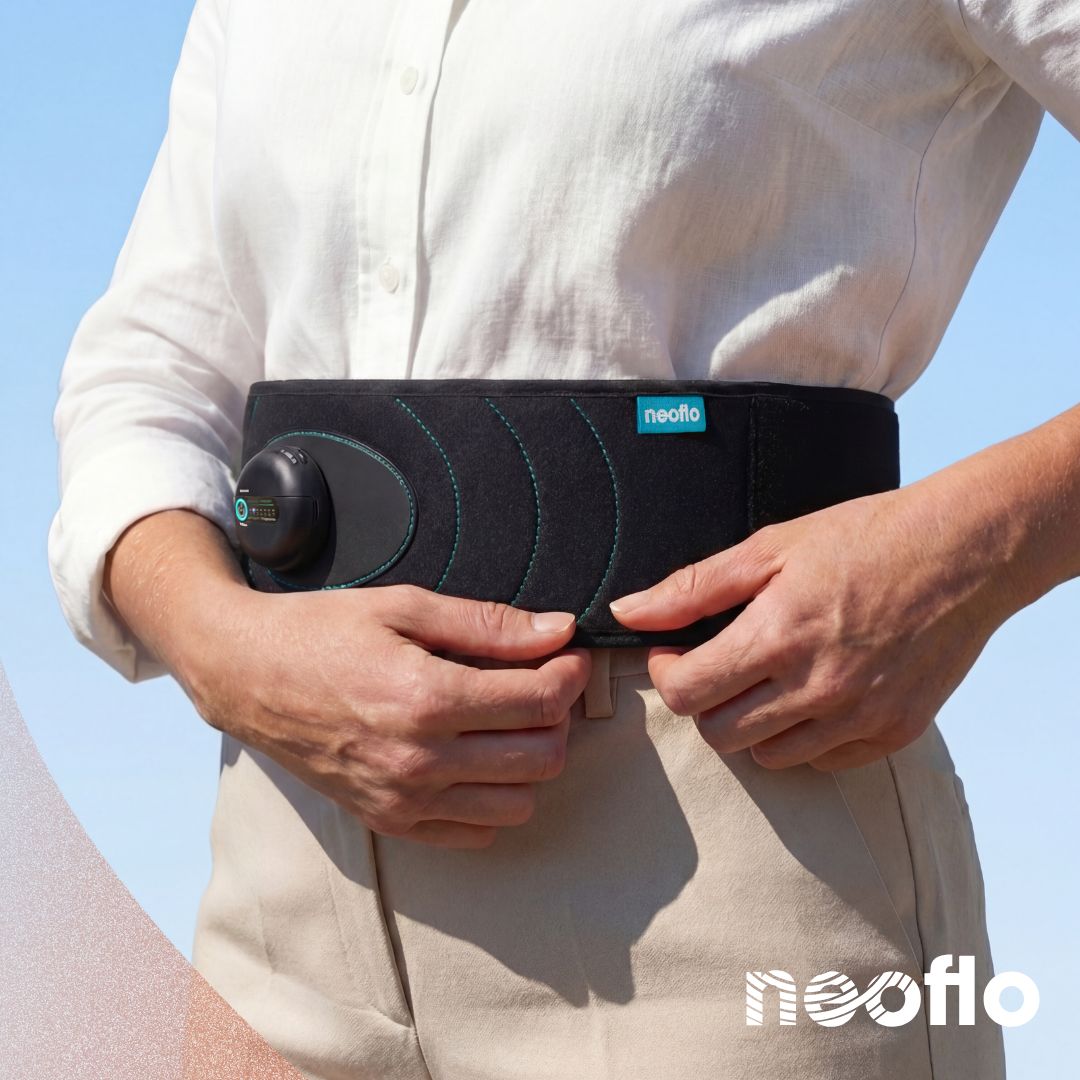
Here are the 6 principles we strictly adhere to, which we have woven into the very fabric of our sensory belt:
- 4-6 rhythm: 4 seconds inhaling / 6 seconds exhaling
- Session > 15 minutes: ideally 20 minutes a day
- Every day: Consistency drives change
- In the evening before bedtime: to help you sleep (see our page on stress-related insomnia)
- Nasal & abdominal breathing: more soothing, more effective — learn more on our abdominal breathing page
- Touch-based navigation: screen-free, effortless, and sensory-driven
The problem isn't understanding… it's putting it into practice
Many people are familiar with coherent breathing. Few practice it. Why?
Because the method requires:
- Time
- Concentration
- Regularity
- And above all… don’t lose focus
That's where neoflo really makes a difference.
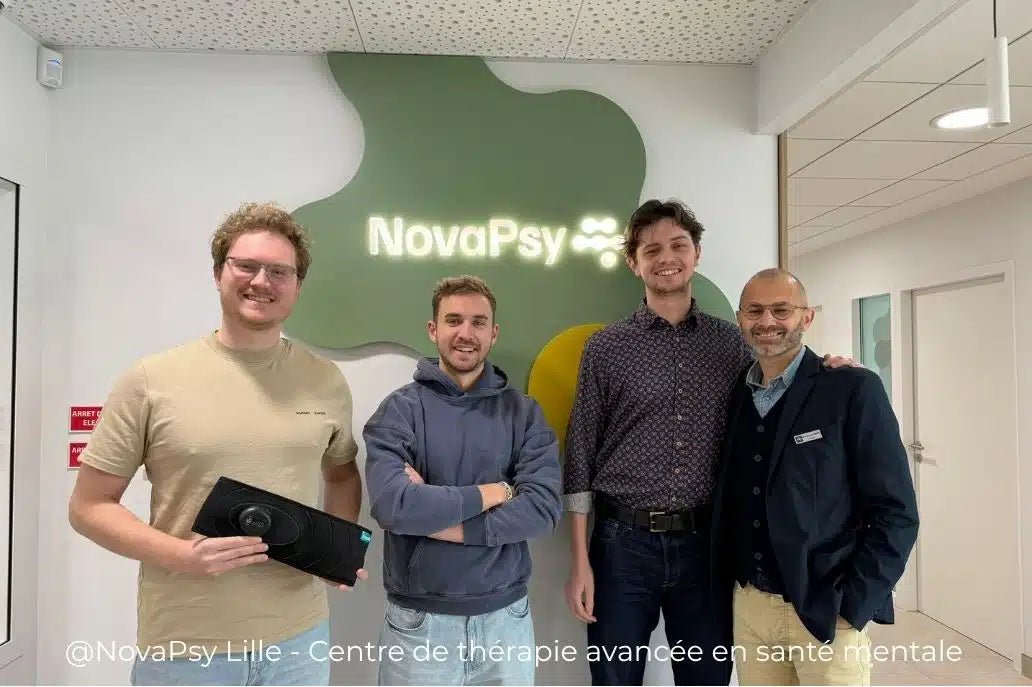
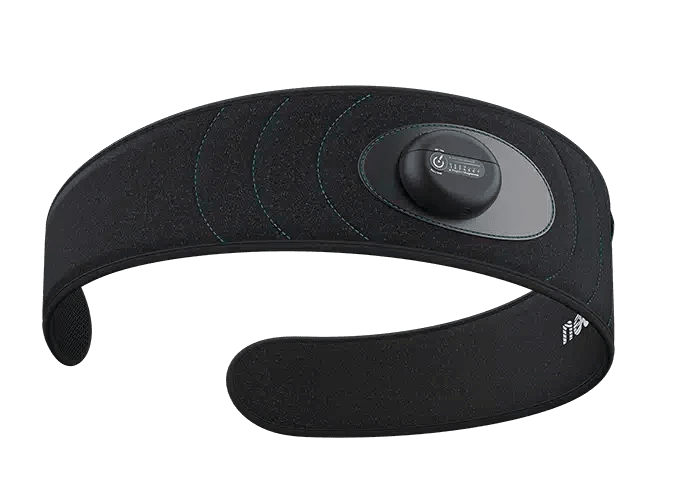
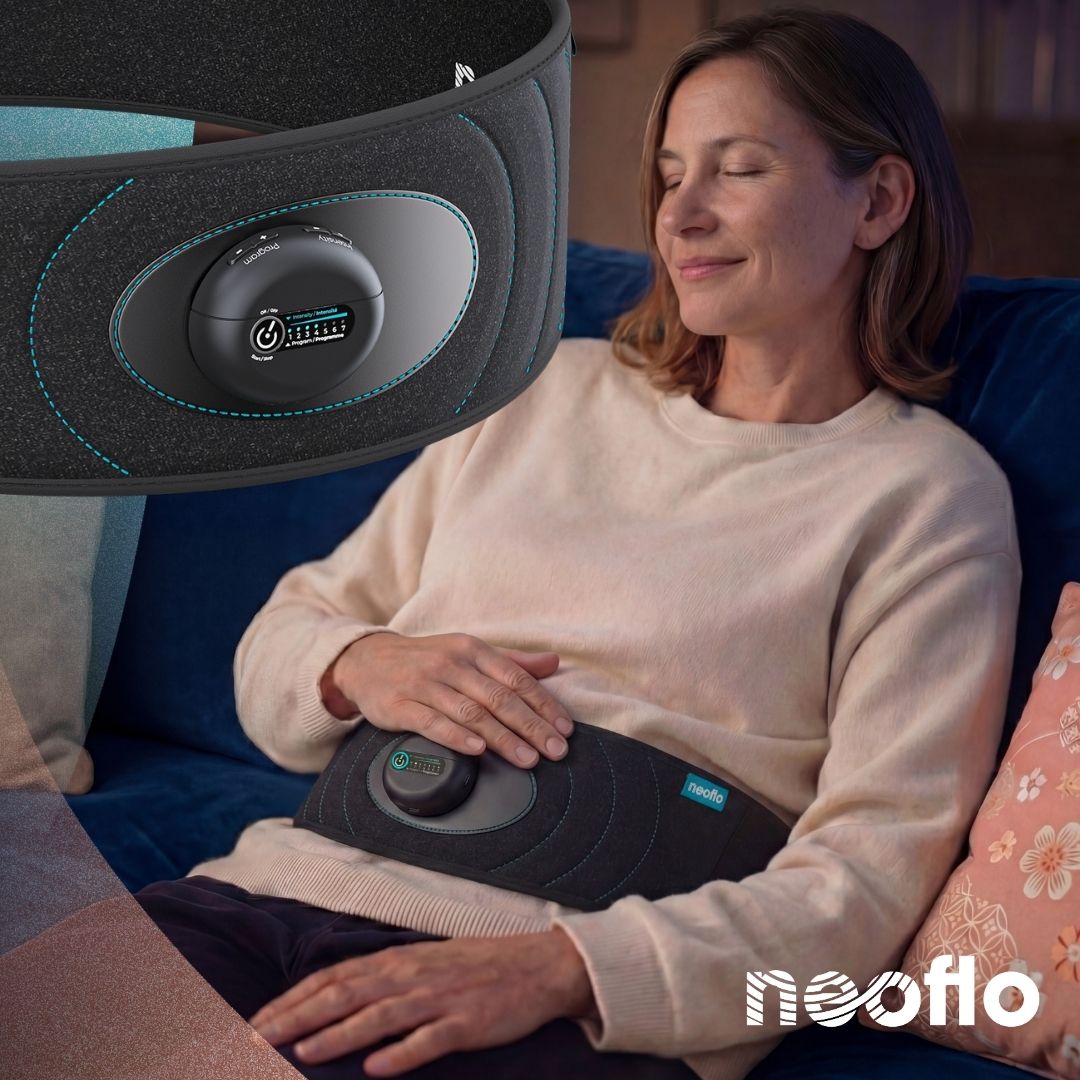
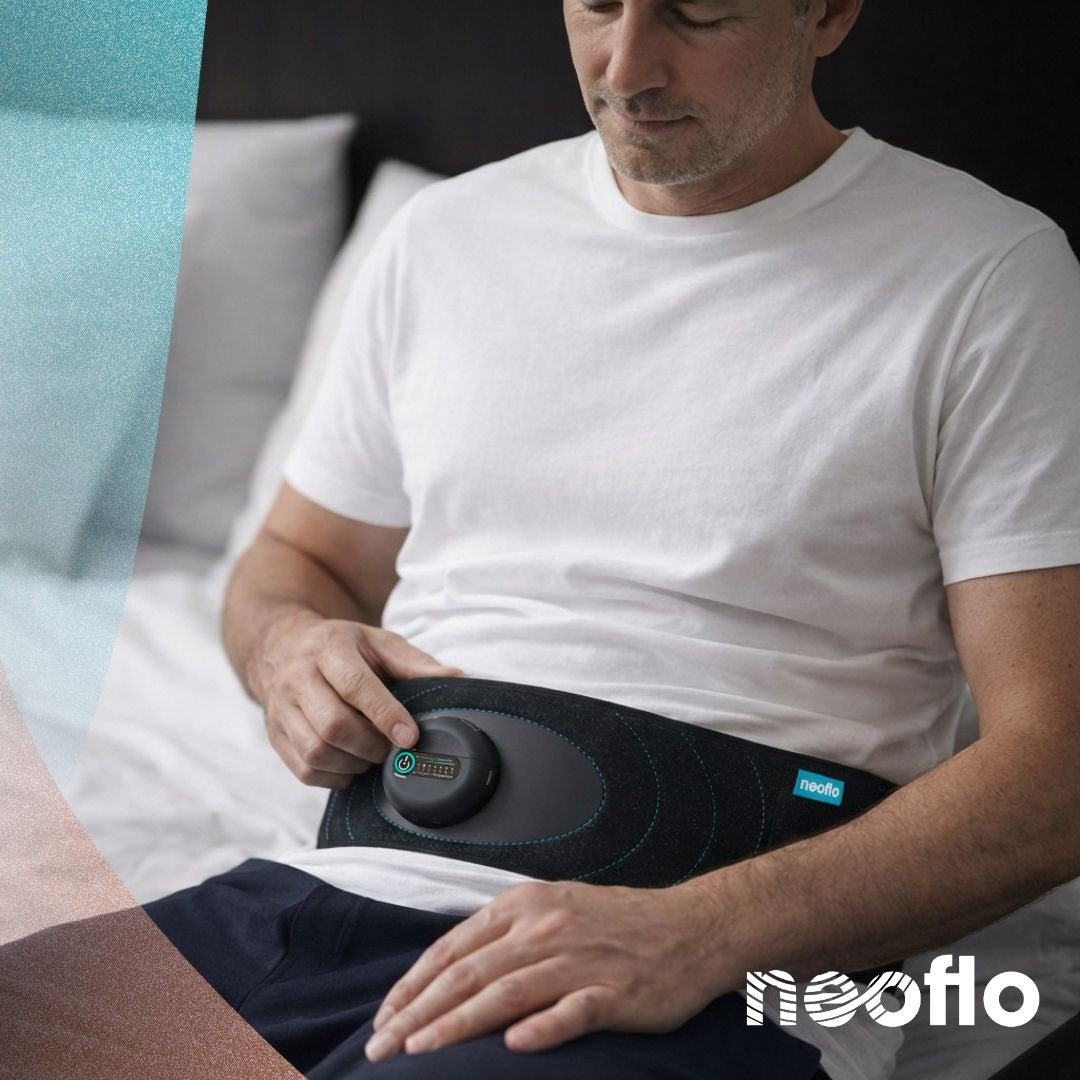
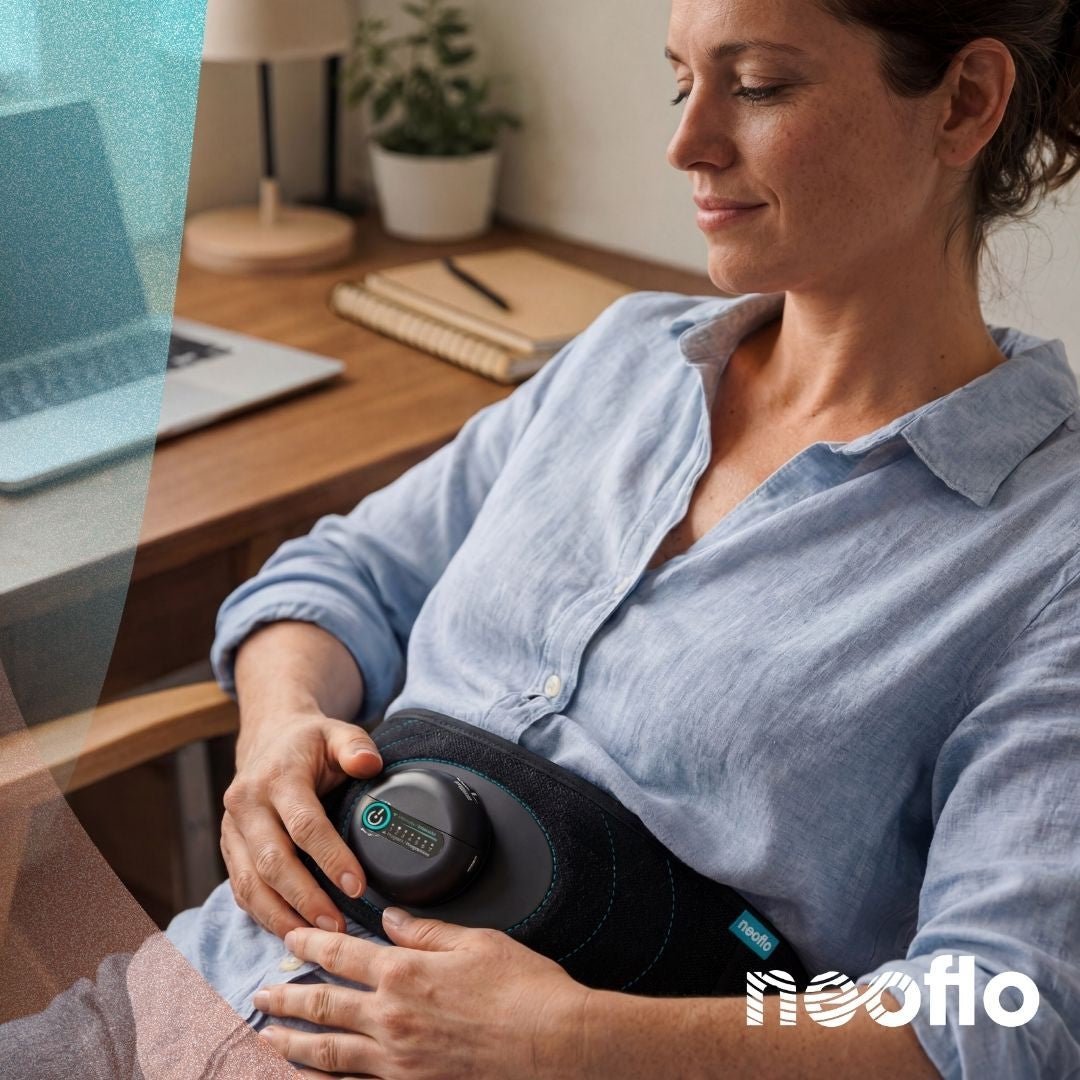
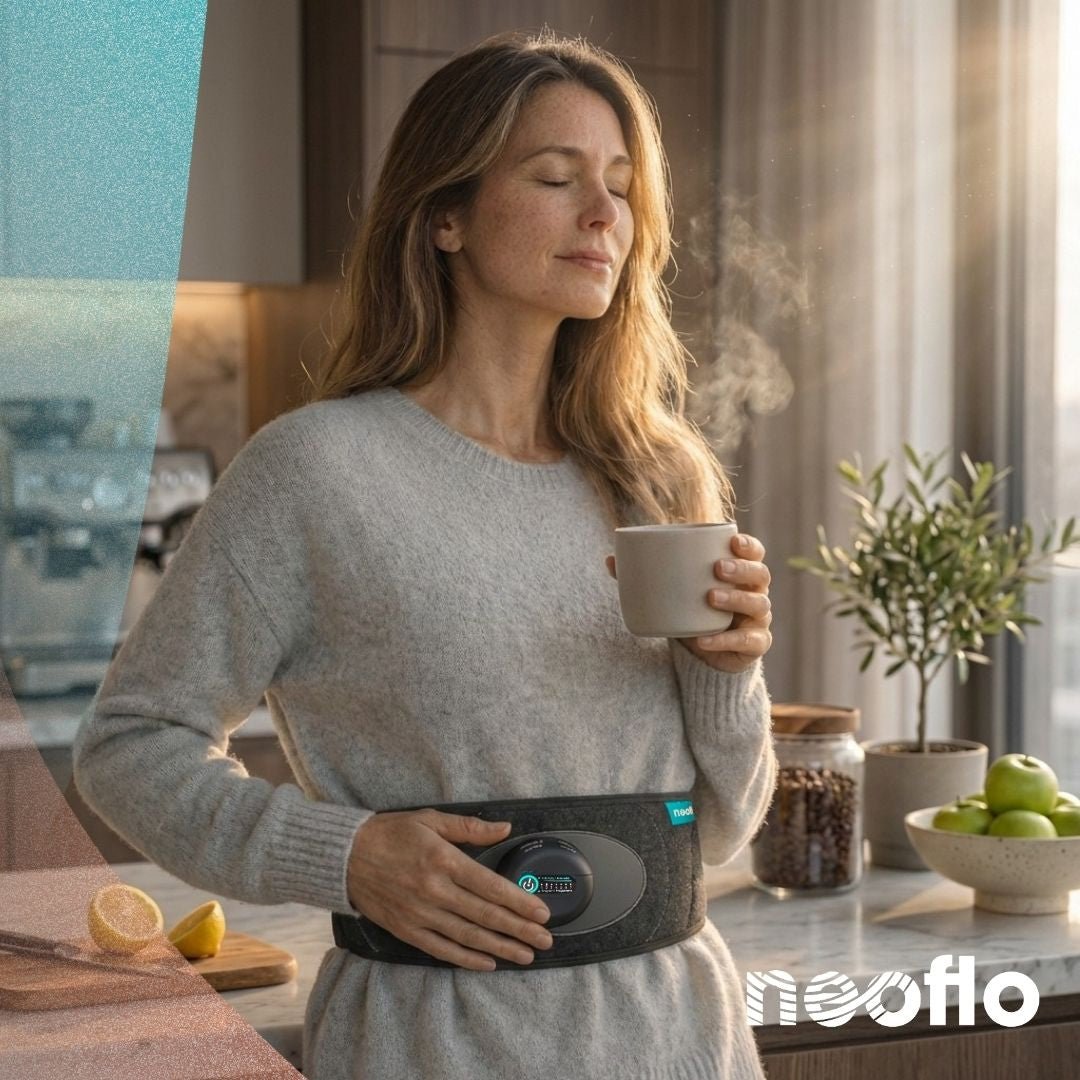
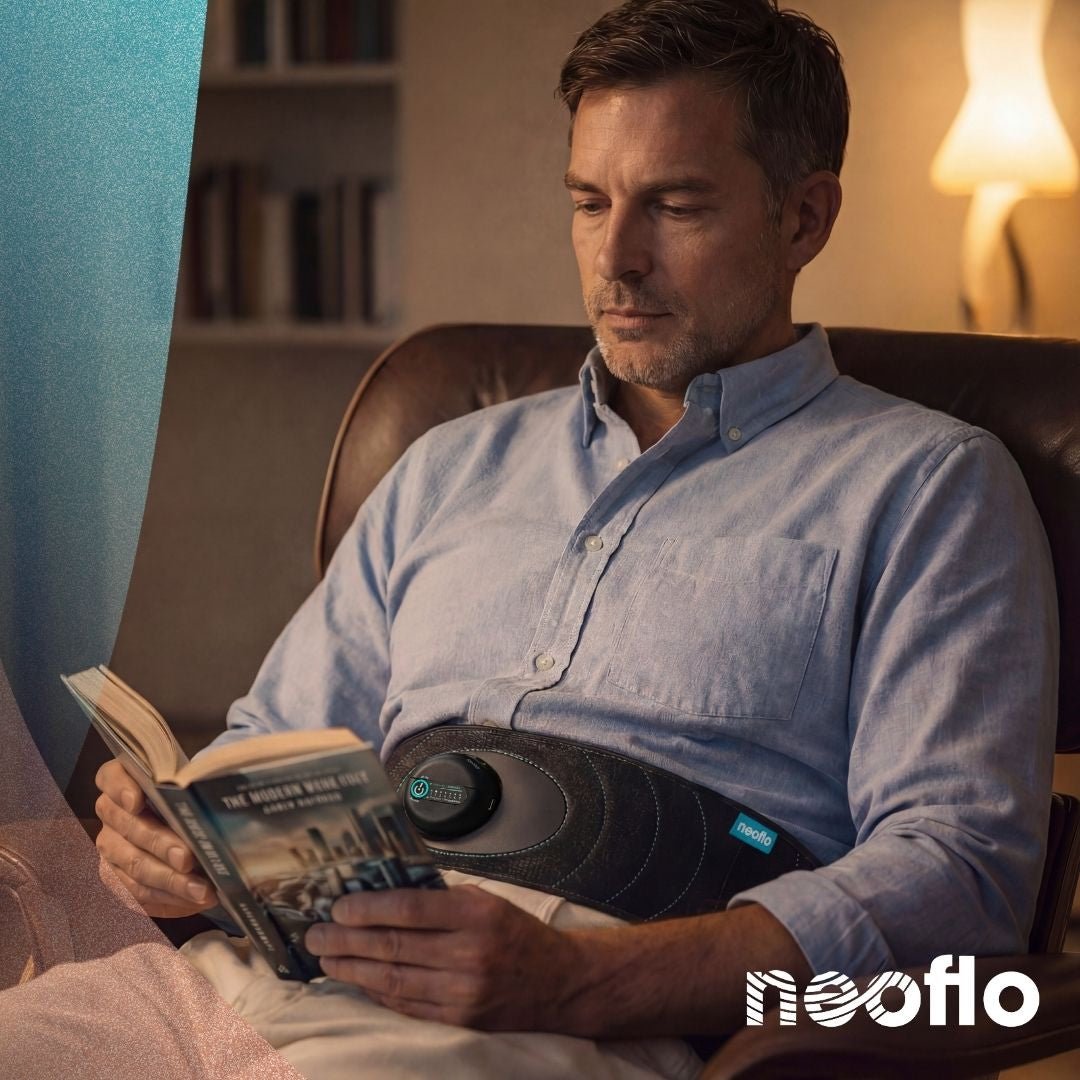
Our belt guides you through touch. No need to count. No need to look at a screen. No need to focus on your breathing, either. Just lie down, close your eyes… and let yourself be guided.
L'étude Bouny et al. (2023, revue Sensors) a démontré que le guidage tactile produit un index de cohérence cardiaque deux fois supérieur au guidage visuel (0,55 vs 0,28, p < 0,05). Pour les profils anxieux que le téléphone perturbe et qui décrochent rapidement face à un écran, c'est décisif.
A gentle vibration tells you when to inhale. Another tells you when to exhale.
And little by little, the body finds its balance. The mind lets go. And calm settles in.

Testimonials from users who have regained their breath
“I used to do sessions with an app, but it was hard to stick with it. With neoflo, I don’t have to think about anything—I can finally breathe. My anxiety has gone down, and I’m sleeping well again.”
— Patricia
“I do 20 minutes every night, without a screen, just using the belt. It’s become my ritual. I really feel the difference when I wake up.”
— Jacques
“My stomach is starting to move again, and I’m digesting food better. My stress is melting away as I breathe—it’s crazy!”
— Camille

neoflo: it’s not “just breathing”; it’s transforming your nervous system to combat anxiety
When you feel like you're having trouble breathing for no apparent reason, it's a sign of a profound imbalance in the autonomic nervous system.
Don't just compensate. Don't remain passive.

Treat your body to a truly restorative routine.
Deep Cardiac Coherence™, practiced for 20 minutes a day with neoflo’s guidance, becomes your daily self-regulation tool. A moment just for you. No screens. No pressure. Just your breath. And peace of mind.
Invented by a biomedical engineer and co-developed with Dr. Thomas Cantaloup, a physician specializing in sleep and mental health. Bronze medal at the 2024 Concours Lépine.
Discover Deep Cardiac Coherence™ with neoflo
20 minutes a day of touch-guided breathing. No screens, no effort. The scientifically proven practice of coherent breathing, finally achievable in everyday life.
- ✓ 30-day "money-back guarantee" trial
- ✓ Free shipping within 48 hours
- ✓ 2-year warranty
- ✓ Designed by a biomedical engineer and a physician
- ✓ Bronze Medal, 2024 Lépine Competition
neoflo is not a medical device and is not a substitute for medical advice. If symptoms persist, consult a healthcare professional.