
The 2 most effective breathing methods to lower cortisol naturally
Cortisol is often called the “stress hormone”—and for good reason: when we’re under stress, our bodies release this glucocorticoid to mobilize energy. While this is helpful in the short term, prolonged excess cortisol can be harmful to our health (fatigue, sleep disturbances, weight gain, constant mental strain, anxiety).

How can you lower cortisol naturally and restore balance?
Among non-pharmacological approaches, breathing plays a key role—it is, in fact, the only function of the autonomic nervous system that we can control voluntarily. In this article, we present two effective breathing techniques for lowering cortisol naturally: abdominal breathing and coherent breathing. We’ll explore how to combine them and why long, regular sessions—neoflo’s Deep Cardiac Coherence™ —maximize their long-term benefits.

1. Abdominal breathing: breathe through your stomach to lower cortisol levels.
Abdominal breathing —also known as diaphragmatic breathing or belly breathing—involves taking deep breaths by expanding the abdomen as you inhale (rather than the chest). This technique engages the diaphragm, a key muscle, and stimulates the vagus nerve, which triggers a relaxation response in the parasympathetic nervous system. The result: your heart rate slows down, your blood pressure drops, you feel calmer… and your body begins to reduce cortisol production. In other words, breathing slowly from the abdomen helps lower cortisol levels physiologically.

Robust scientific research confirms these effects. A study published in Frontiers in Psychology (2017) found that after 8 weeks of diaphragmatic breathing training (20 sessions of 30 minutes each), healthy adults showed a significant decrease in salivary cortisol levels compared to a control group. This reduction in cortisol was accompanied by improved mood and increased attention. Similarly, a 2019 systematic review concluded that diaphragmatic breathing is effective in reducing physiological markers of stress, including respiratory rate and cortisol levels. The Kwon 2025 meta-analysis (48 clinical trials) confirms and clarifies: these effects are dose-dependent.
In short, breathing from the abdomen for a few minutes a day triggers measurable relaxation responses: it’s a simple and natural way to lower cortisol levels and restore inner calm.

How do you do it?
Abdominal breathing can be practiced anywhere, whether sitting or lying down:
- Place one hand on your stomach and the other on your chest to feel the movement.
- Breathe in slowly through your nose, letting your belly expand beneath your hand (while your chest remains almost still).
- Exhale slowly through your mouth (or nose) while pulling your stomach in, as if you were deflating a balloon.
- Take slow breaths, inhaling for 5 to 6 seconds and exhaling for 5 to 6 seconds. Focus on the rise and fall of your abdomen.
Just a few minutes of deep breathing is enough to trigger a relaxation response. With regular practice, your body will get used to breathing more deeply, which will help lower your baseline cortisol levels and help you better manage daily stress.

2. coherent breathing 6 breaths per minute to reduce stress and cortisol
The coherent breathing is a rhythmic breathing technique designed to synchronize breathing with variations in heart rate (heart rate variability). In practice, this involves breathing at a steady rate of approximately 6 breaths per minute (for example, 4 seconds of inhalation, 6 seconds of exhalation). This specific cadence (~0.1 Hz) resonates with the cardiovascular baroreflex, maximizes the heart’s natural oscillation, and strongly activates the vagus nerve, inducing a state of deep physiological calm. coherent breathing known to reduce perceived stress, improve emotional balance, and, as a result, help lower cortisol levels over the long term.
Once again, science backs up these benefits. A clinical study by the HeartMath Institute reported that after one month of daily practice of coherent breathing exercises coherent breathing combined with emotion management techniques), adults saw their cortisol levels drop by an average of 23%. Interestingly, the same study noted a doubling of DHEA levels, an anti-stress hormone often called the “youth hormone”—which illustrates how coherent breathing a more favorable hormonal balance (less cortisol, more DHEA).
Other studies confirm this positive effect. A meta-analysis published in 2023 concluded that in slow-breathing exercises such as coherent breathing, participants’ cortisol levels were significantly lower than those of control groups. In short, learning to deliberately slow down our breathing and synchronize our heartbeat with our breath helps our bodies counteract excess cortisol.

Long sessions: Deep Cardiac Coherence™, the transformative experience
It is generally recommended to practice coherent breathing minutes, 3 times a day (the 365 rule: 3 times a day, 6 breaths per minute, 5 minutes) to reap the benefits. These short sessions are excellent for quickly relieving stress. However, recent findings suggest that extending the duration of the sessions significantly enhances the long-term hormonal and neurological effects. This is what neoflo calls Deep Cardiac Coherence™: 20 minutes a day, at 6 cycles per minute, using abdominal breathing.

The 2023 study conducted by Mather and Lehrer showed that daily 20- to 40-minute sessions of coherent breathing, over a period of 5 weeks, led to significant remodeling of the neural circuits between the prefrontal cortex and the amygdala (the brain regions that manage our emotions and stress responses). In other words, practicing for longer periods induces profound changes that make the brain and body more resilient to stress over the long term—and that lower baseline cortisol levels, not just during the session.

Therefore, to lower cortisol levels in a sustainable way, it’s a good idea to set aside at least 15 to 20 consecutive minutes for coherent breathing your sessions (rather than just brief, sporadic breaths). You can, of course, start with 5 minutes if you’re a beginner, then gradually increase the duration: 10 minutes in the second week, and 15–20 minutes thereafter. Longer sessions promote deeper relaxation, stabilize cortisol levels, and build greater resilience to stress over the long term. Many people find a 20-minute session in the evening helpful for releasing accumulated cortisol and improving sleep, or in the morning to start the day with a sense of calm.
3. Combine abdominal breathing and coherent breathing maximize the effects.
Although they are presented separately, these two methods are not mutually exclusive—on the contrary, they complement each other perfectly. In fact, coherent breathing best practiced using abdominal breathing: it is by breathing slowly through the abdomen that you achieve the greatest respiratory depth and the strongest vagal activation. By combining the two, you reap the full benefits: the coherent rhythm (6 breaths per minute) optimizes heart rate variability and sends a calming signal to the brain, while deep abdominal breathing ensures maximum oxygenation and physical relaxation (thanks to the diaphragm), which helps curb cortisol secretion.

In practice, start a coherent breathing session coherent breathing a few slow abdominal breaths to “loosen up” the diaphragm. Then, continue in the same manner, counting ~5–6 seconds on the inhale and ~5–6 seconds on the exhale, to reach a rate of 6 cycles per minute. Focus on the movement of your abdomen and, if you like, on the sound of your breath. After about ten minutes, your heart rate will synchronize with your breathing, your mind will clear, and a sense of calm will set in. Maintain this for as long as possible (15, 20, 30 minutes…) to anchor this state. With daily practice of this breathing technique, you will train your body to better regulate its cortisol levels and remain calm in the face of stress.

4. The Neoflo breathing belt: hold your breath for 20 minutes with ease
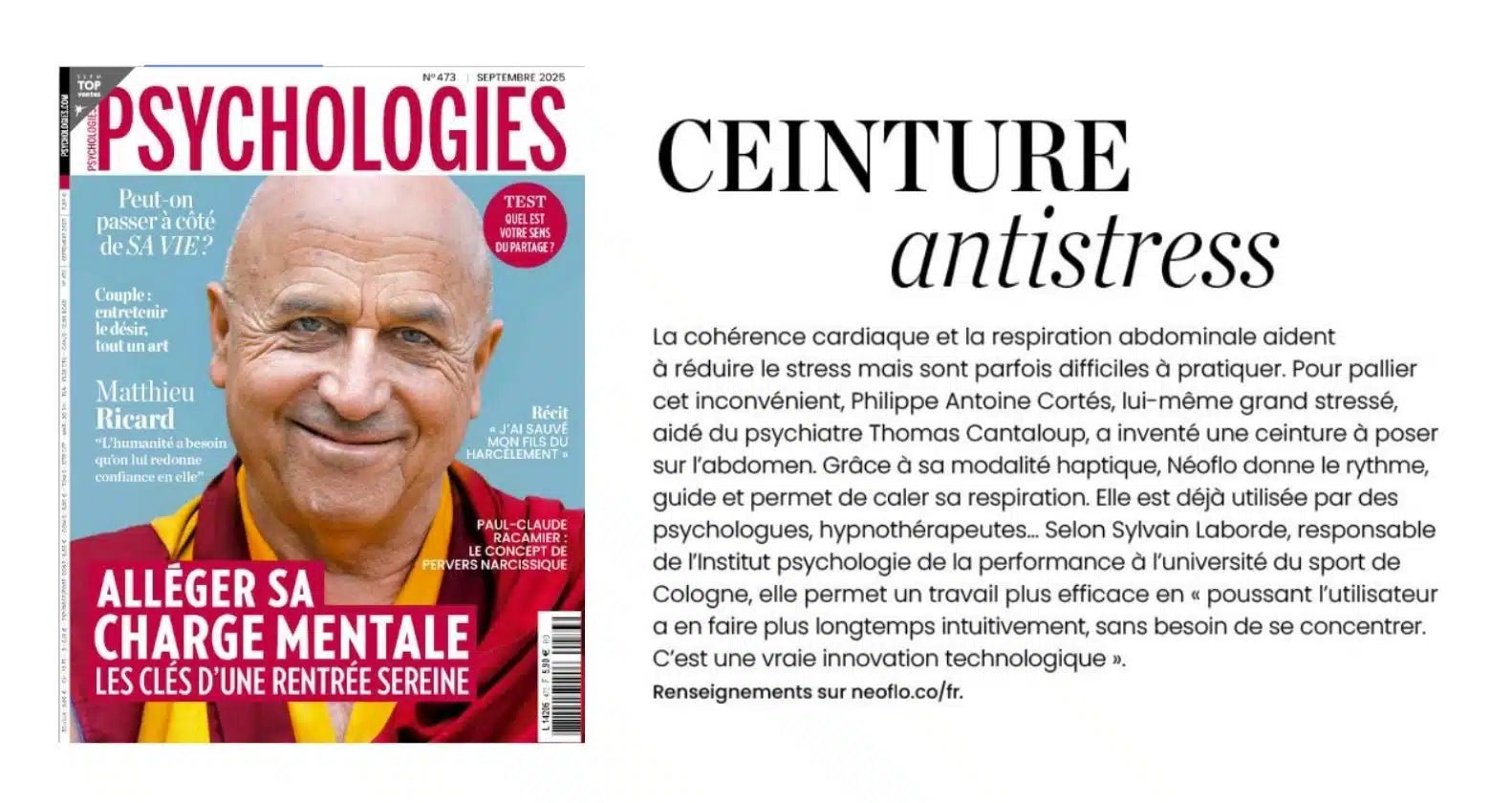
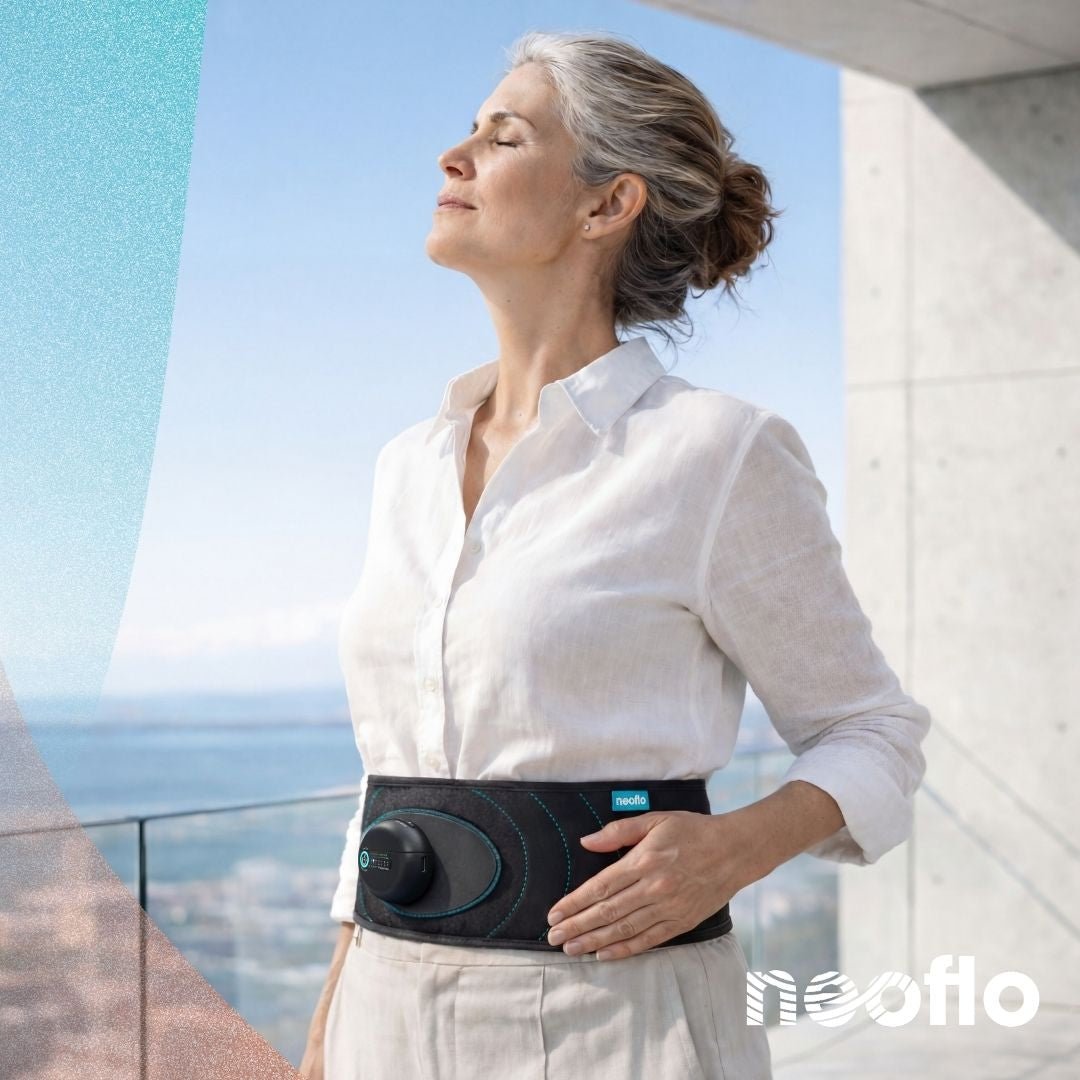
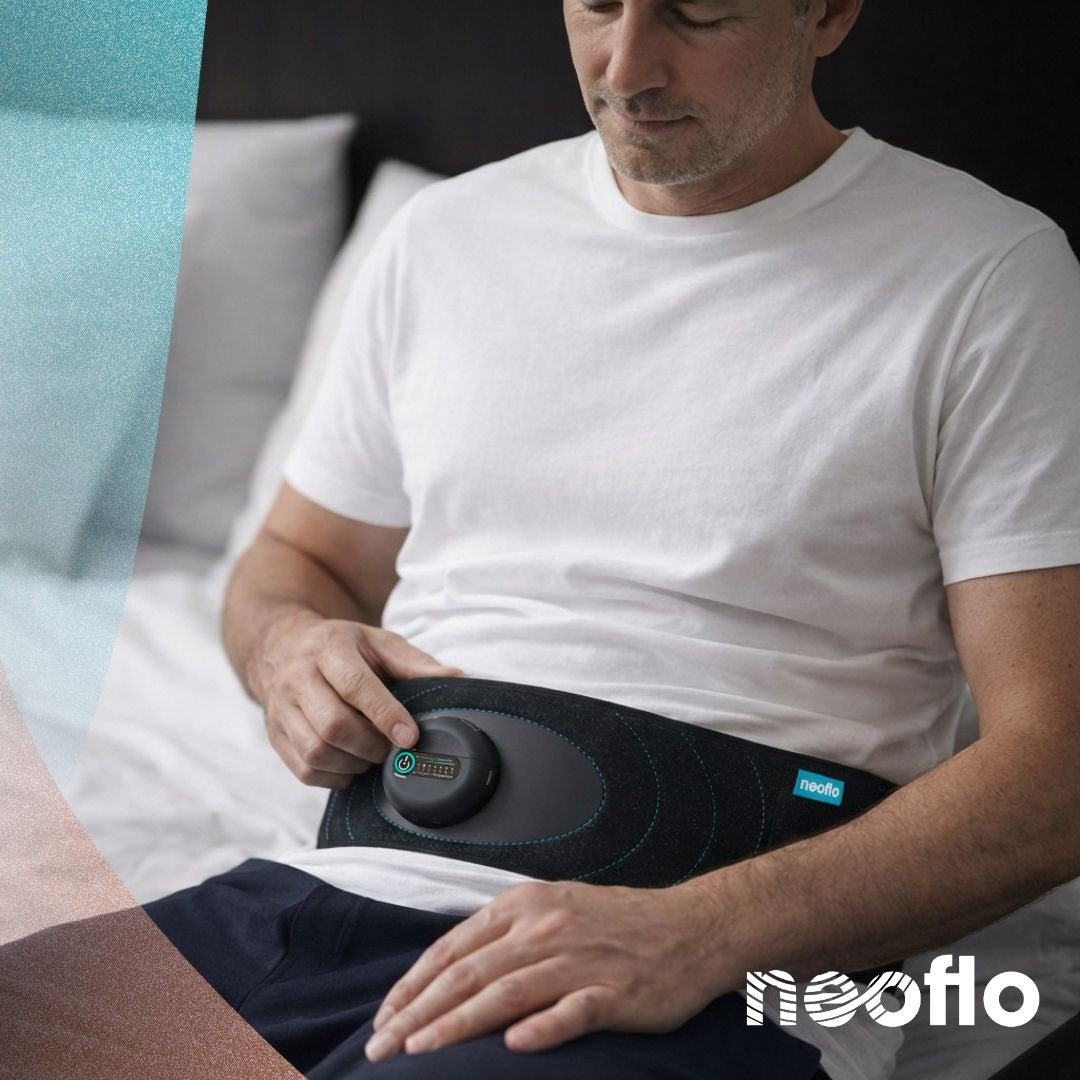
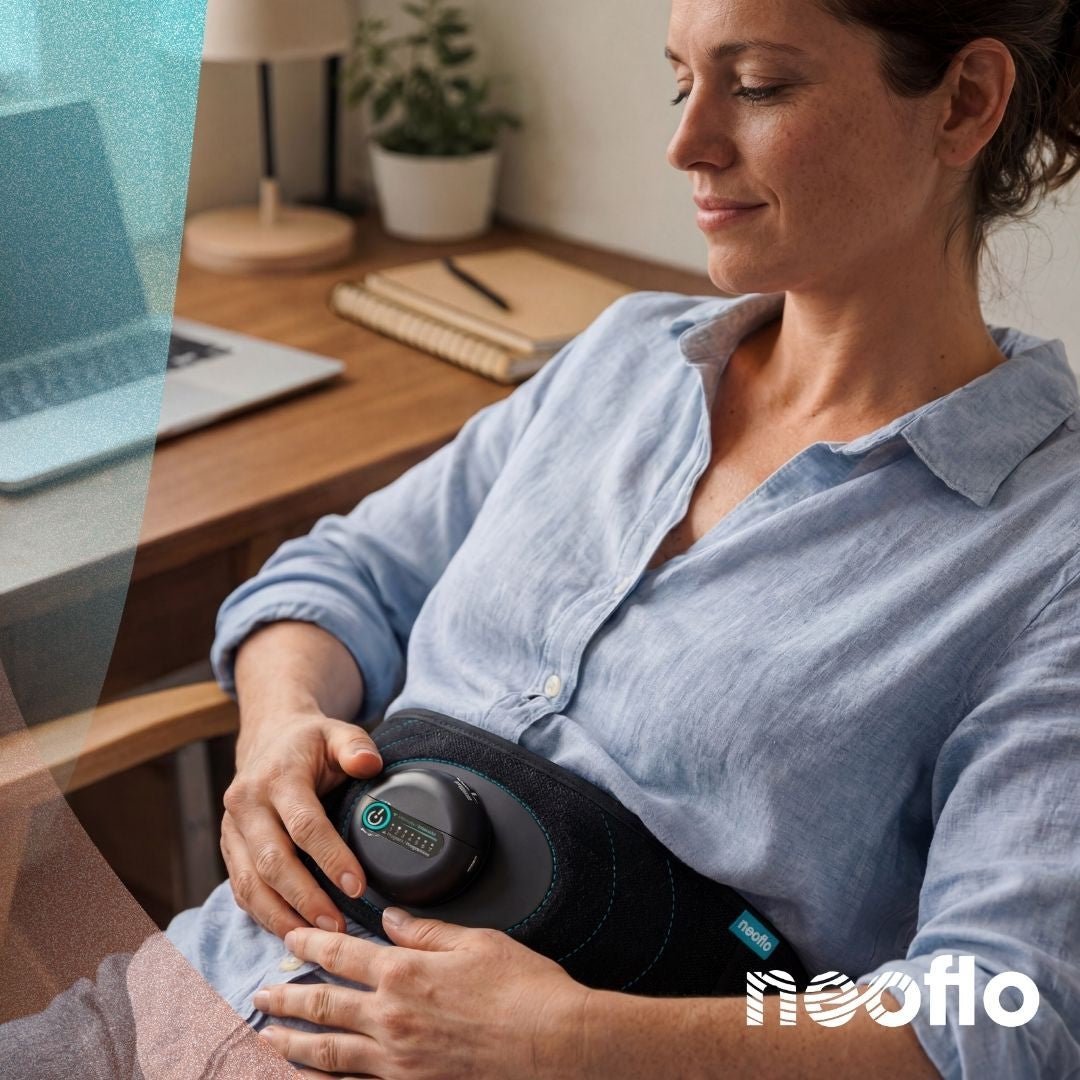
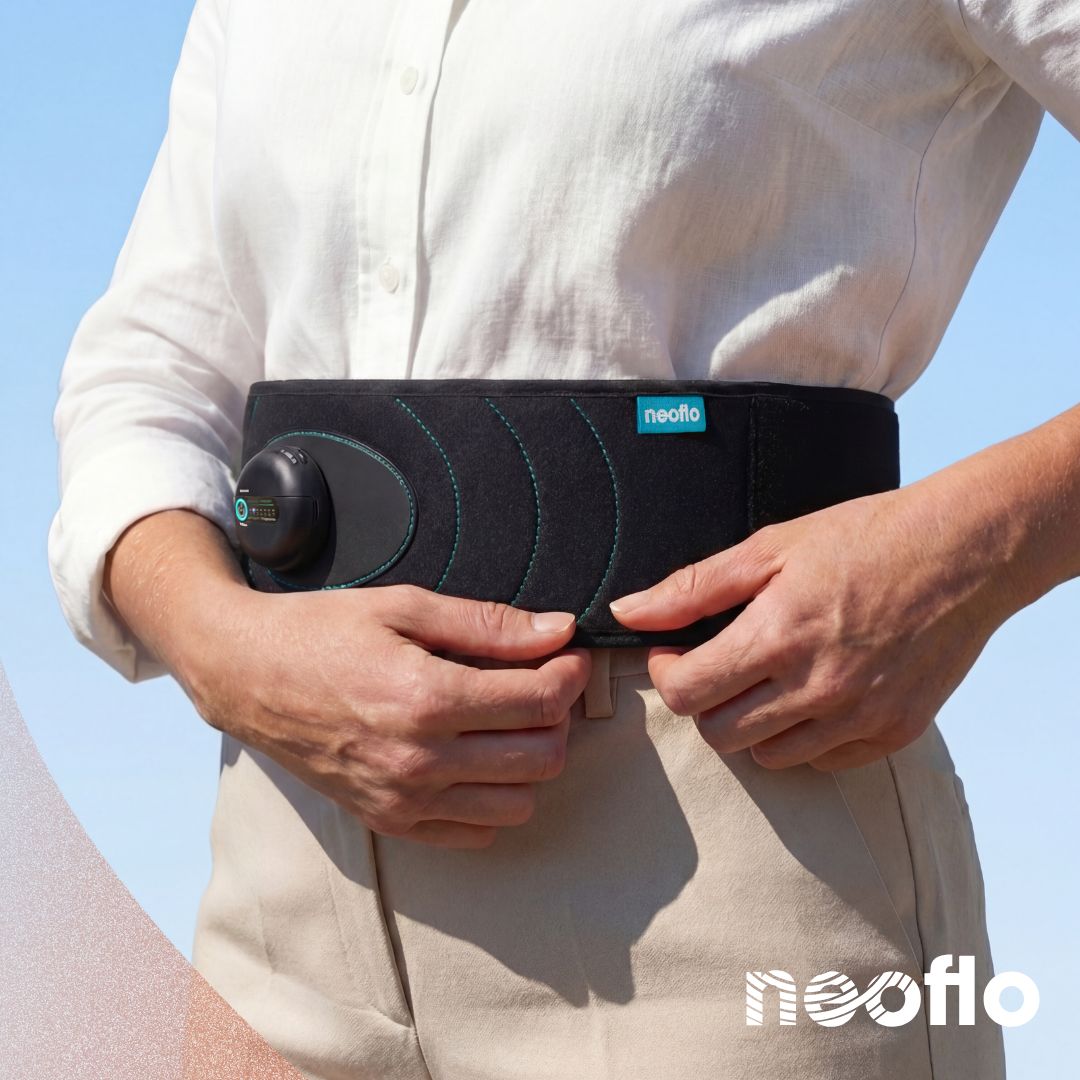
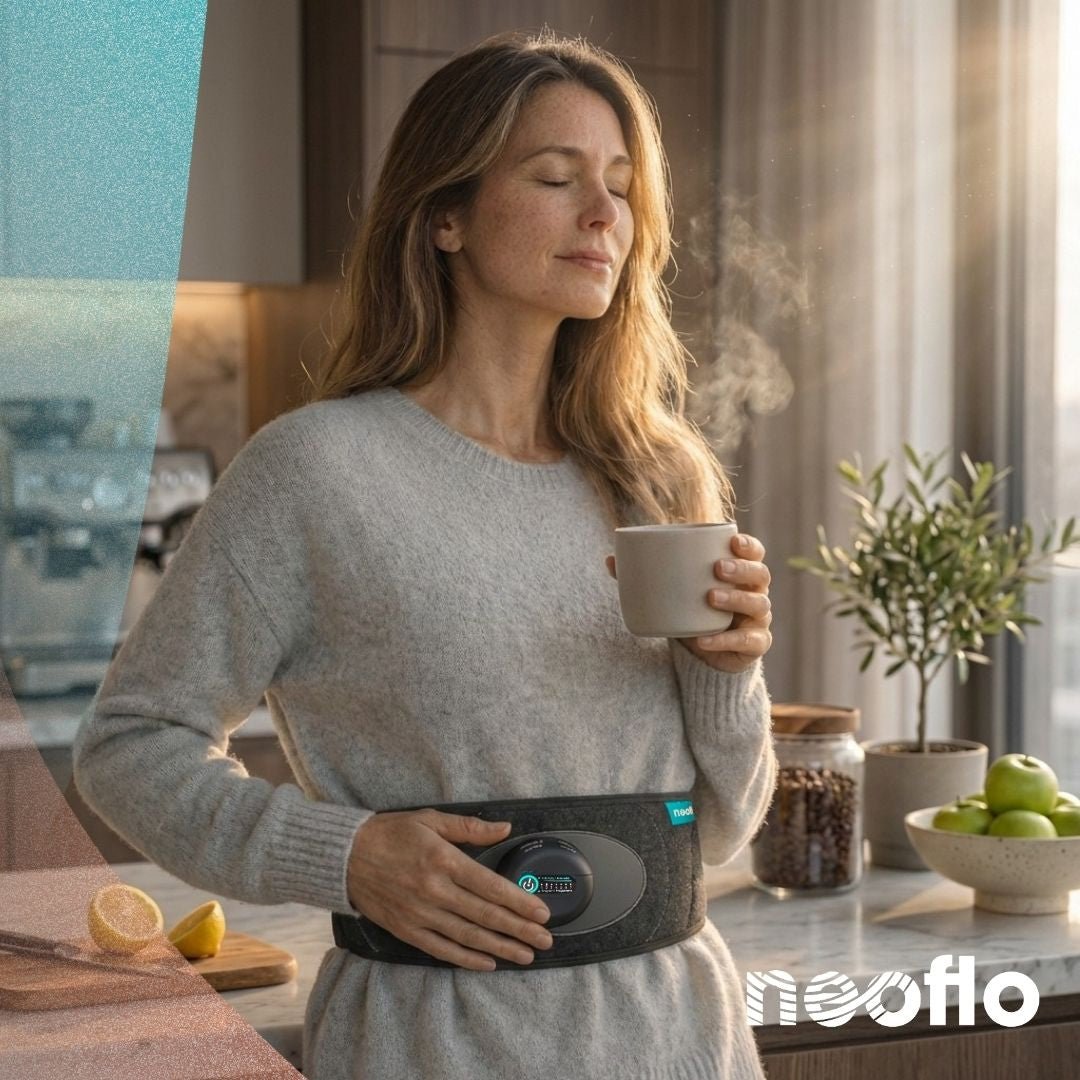
While it can sometimes be difficult to stay motivated or maintain the right rhythm without distractions, there are tools that can help. The neoflo breathing belt is an innovative device designed specifically for Deep Cardiac Coherence™: 20 minutes of touch-guided abdominal breathing, with no screen and no app. Three haptic motors placed on your abdomen tell you when to inhale and exhale, automatically keeping you at the ideal rhythm of 6 breaths per minute. Bronze medal at the 2024 Lépine Competition.
L'étude Bouny et al. (2023, revue Sensors) a démontré que le guidage tactile produit un index de cohérence cardiaque deux fois supérieur au guidage visuel (0,55 vs 0,28, p < 0,05). Pour baisser le cortisol, c'est décisif : la séance de 20 minutes devient enfin tenable au quotidien.
- Intuitive guidance: Synchronized haptic vibrations let you know when to inhale and exhale, keeping you in the ideal rhythm without having to concentrate.
- Easier to practice: You can do sessions of 20 minutes or longer without losing focus, which helps you reach the optimal duration for lowering cortisol levels over the long term.
- Versatile use: discreet and quiet, perfect for any time of day—during a break, while watching TV, or at bedtime.
- No screen, no apps: say goodbye to blue light and notifications—your nervous system can really unwind.

By guiding smooth, abdominal, and consistent breathing, the Neoflo belt helps you fully harness the power of your breath. You’ll activate your vagus nerve more easily, which promotes relaxation and reduces cortisol levels over the course of your sessions. Plus, sticking to a regular routine becomes simple and enjoyable. Many users find that with this tool, coherent breathing a daily habit—and their testimonials report better stress management, improved sleep, and a renewed sense of inner calm.
In conclusion, using breathing to lower cortisol is something anyone can do. Abdominal breathing and coherent breathing techniques coherent breathing a natural, scientifically backed, and accessible approach to regulating our stress hormone. By combining these methods and practicing for sufficiently long sessions— such as 20 minutes of Deep Cardiac Coherence™ per day—you can effectively reduce cortisol while improving your overall well-being. Take a few minutes each day to breathe mindfully through your abdomen and synchronize your heart: your body and mind will thank you, resulting in less stress, balanced cortisol levels, and optimized long-term health.

Sources:
- Ma X. et al. (2017). The Effect of Diaphragmatic Breathing on Attention, Negative Affect, and Stress in Healthy Adults. Frontiers in Psychology, 8:874.
- Hopper S.I. et al. (2019). Effectiveness of diaphragmatic breathing for reducing physiological and psychological stress in adults: a quantitative systematic review. JBI Database of Systematic Reviews and Implementation Reports, 17(9), 1855–1876.
- McCraty R. et al. (1998). Impact of a new emotional self-management program on stress, emotions, heart rate variability, DHEA, and cortisol. Integrative Physiology & Behavioral Science, 33(2), 151–170.
- Mather & Lehrer et al. (2023). Enhancing the coordination and responsiveness of emotion-related brain regions through heart rate variability biofeedback. Cogn Affect Behav Neurosci.
- Kwon CY et al. (2025). Effects of diaphragmatic breathing on chronic disease: A systematic review and meta-analysis of 48 randomized controlled trials. Complementary and Alternative Medicine.
- Bouny P et al. (2023). Haptic versus visual cardiac coherence biofeedback guidance. Sensors.
Discover Deep Cardiac Coherence™ with neoflo
20 minutes a day of touch-guided breathing. No screens, no effort. The scientifically proven practice of coherent breathing, finally achievable in everyday life.
- ✓ 30-day "money-back guarantee" trial
- ✓ Free shipping within 48 hours
- ✓ 2-year warranty
- ✓ Designed by a biomedical engineer and a physician
- ✓ Bronze Medal, 2024 Lépine Competition
neoflo is not a medical device and is not a substitute for medical advice. If symptoms persist, consult a healthcare professional.